Context
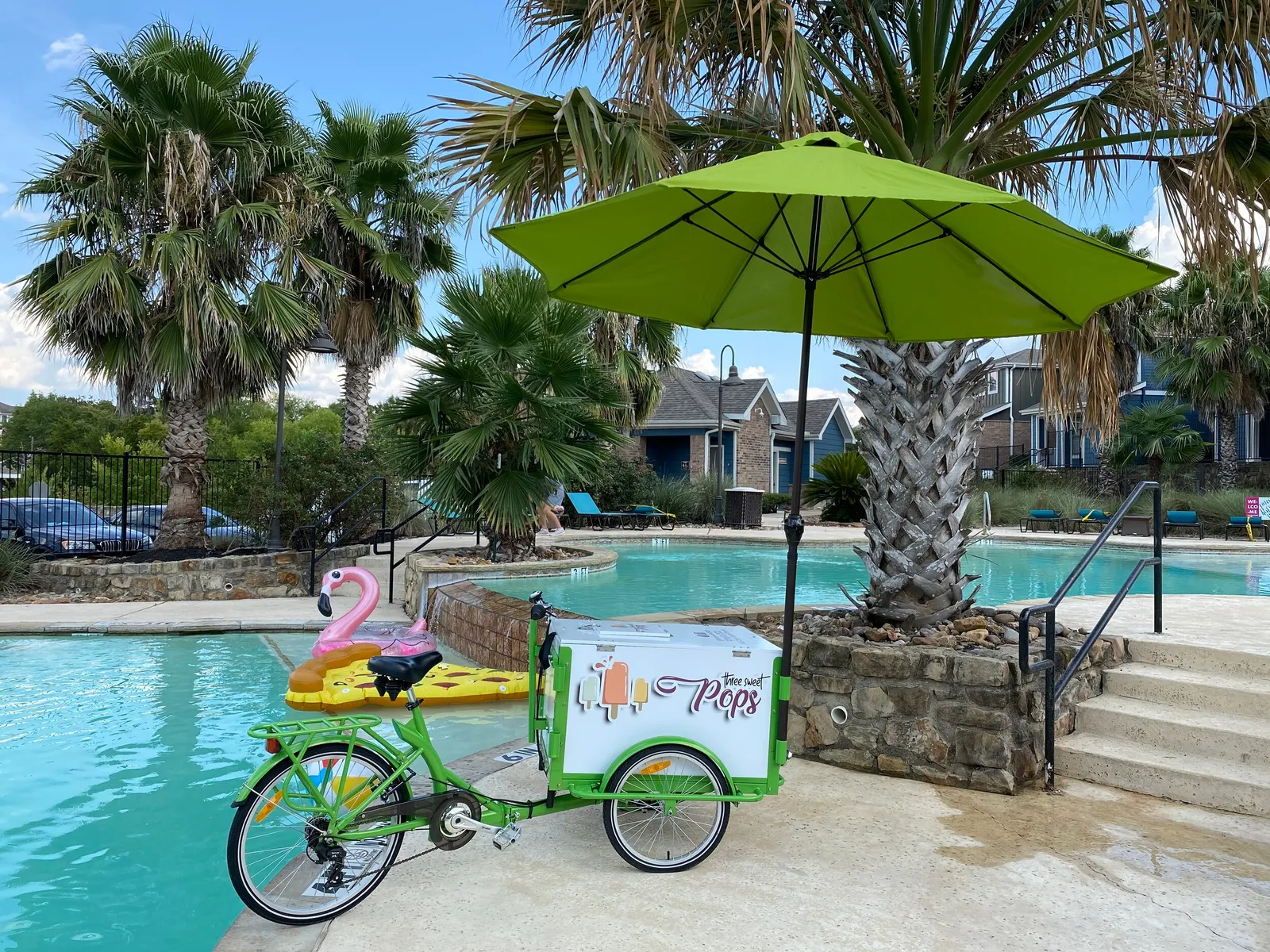
Three Sweet Pops is a gourmet popsicle shop serving Bryan and College Station, Texas. It makes its pops fresh from its own recipes, keeps vegan, vegetarian and lactose-free options on the board, and sells both from a storefront and from a portable cart that travels to local events, tailgates and catering jobs. The brand is family run and openly Hispanic in its roots, and it welcomes Spanish-speaking customers. Its public face at the time of the engagement was an Instagram account with a warm, people-forward feed, a website, and a steady presence at first-Friday style events around the two cities.
The engagement fell in the fall of 2021, after the shop had graduated from a rented commercial kitchen into a full-time one and a storefront of its own. Invitations were arriving to sell beyond the home market, including weekends at a regional mall, and catering enquiries were growing faster than the menus that supported them. Winter was approaching, which shortens the season for a frozen dessert, and the dessert businesses around the shop had made ordering ahead and delivery a normal part of how customers reach them.
Challenge
Three Sweet Pops, a gourmet popsicle shop in Bryan and College Station, had an authentic brand and a lively Instagram feed. The owners wanted to know which flavors deserved a place on an expanding menu, how to make social media work harder for customer engagement and catering, and whether weekends at a regional mall, wholesale partnerships, or the portable cart offered the better route to growth. The menu question was the one that had waited longest: the shop wanted to add flavors but had no record of how individual flavors sold, so every menu change was a judgment call made without data. Around it sat a set of practical constraints, a frozen dessert season that thins out in winter, invitations to sell in places well outside the home market, and a catering side that needed menus of its own before it could be sold properly.
How the team worked
The team opened in October by meeting the owners, working through a general SWOT and a second one focused on social media, and reviewing the shop's Instagram presence before agreeing on a set of SMART goals: improve customer engagement on social media, design menus for social media and catering, analyze inventory data to guide flavor decisions, and weigh the costs and benefits of expansion and partnership opportunities. Each member took ownership of a goal, and the team put an official weekly schedule in place so the goals stayed separate rather than blurring into general marketing help.
Rather than wait for the final deliverable, the team met the owners partway through the term to set up sales tracking by individual flavor in the point-of-sale system, so that a real record would exist by the time menu recommendations were written. A consumer survey on the Instagram bio, logo and feed ran in parallel, and the same survey put the feed beside a peer gourmet popsicle brand so the comparison came from readers rather than from the team's own reading.
A second client meeting in November turned feedback into the shape of the deliverable. Menus were built in a browser design tool so the owners could keep editing them after handoff, post templates were drafted for flavor launches and for a weekday posting calendar, the mall weekend was costed against the cart, and direct and indirect competitors were reviewed for what they did about ordering and retention rather than for what they sold.
The team closed in December by finishing the flavor chart, compiling business and point-of-sale resource documents, and reviewing the work internally at TASK before presenting the written plan and the final deck to the owners. The plan was organized goal by goal, with exhibits collecting the survey, the preset and design resources, and the links behind each recommendation so the owners could act on any one of them without the team present.
Workstreams
- Surveyed consumers on the shop's Instagram bio, logo, and feed, and compared the feed with a peer popsicle brand to identify what set Three Sweet Pops apart.
- Delivered social media recommendations covering Spanish-language bio copy, logo presentation, consistent photo editing, posting times, Instagram highlights, and post templates for new flavor launches.
- Designed editable social media menus, seasonal menus, and a main and catering menu, with suggested popsicle names and flavor descriptions.
- Helped the shop set up flavor-level sales tracking in its point-of-sale system and advised on how to read early inventory data before adding or retiring a flavor.
- Evaluated the costs and benefits of selling weekends at a regional mall against the portable cart, and mapped future wholesale and partnership opportunities with hotels, restaurants, and the university.
- Reviewed direct and indirect competitors and compiled resources on customer retention, online ordering and delivery, content banking, insurance, and accounting support.
What the team found
- Consumers who reviewed the Instagram presence described the feed as appetizing and the brand as welcoming, and read the plain statement of location in the bio as one of its clearest strengths.
- Set beside a peer gourmet popsicle brand, the feed stood out for putting people in the frame, which readers found the more personable of the two, and interest in the two brands came back broadly comparable.
- Brightness varied from post to post, and posts where the product sat against a contrasting background read more clearly than those where product and background shared a tone.
- Most of the shop's competition was indirect rather than direct, so the useful lessons came from how other dessert businesses handled ordering and retention rather than from what they sold.
- Ordering was the clearest difference between the shop and the businesses around it: ordering ahead and delivery were common among them, and an online ordering path remained an option the shop had not yet taken up.
- Weekend selling at a regional mall carried rent and travel that a higher per-item price only partly offset, while the portable cart could reach comparable customers without committing to a fixed weekend cost.
What the client received
- Written final deliverable plan organized around the four SMART goals
- Final presentation deck walking the owners through each goal
- Consumer survey on the Instagram bio, logo, and feed, with recommendations
- Instagram post templates for flavor launches and a weekday content-banking calendar
- Social media, seasonal, and main and catering menu designs with popsicle name ideas
- Flavor-level sales tracking set up in the point-of-sale system, with a chart of early results
- Cost-benefit analysis of weekend selling at a regional mall and a map of future partnership opportunities
- Business resources and point-of-sale resources documents, with links on ordering, retention, insurance and accounting
Outcome
Three Sweet Pops came away with ready-to-use menus and post templates it can edit itself, a flavor-level sales record it can consult before changing the menu, and a rule of thumb for how long to watch a flavor before acting on it. It has a clear view of what a mall weekend would need to cover to be worthwhile and why the portable cart remains the more flexible option, a shortlist of wholesale, catering and partnership routes to pursue, and a set of engagement and ordering ideas ordered by how quickly each could be put in place.
Recommendations
- Make the small social media adjustments first: add a Spanish-language welcome to the bio, crop the logo tighter so the name reads at profile size, lift the outer popsicles off the white background, and buy editing presets so posts hold a consistent brightness.
- Organize Instagram highlights into special events, about us, menu and testimonials, and use the about folder to put the family and the brand's Hispanic roots in front of customers, in Spanish as well as English.
- Lean into the local college culture with popsicle designs and names tied to the town and campus, and keep a physical presence at game days and special events where that audience already gathers.
- Publish a calendar of the events the cart will attend, on the website, in the store or on social media, and add loyalty cards so occasional customers have a reason to plan a return visit.
- Add an order-ahead or delivery path, either through the point-of-sale provider's own online ordering or through a delivery service, since that is the capability most of the surrounding businesses already offer.
- Treat a mall weekend as a trial worth running once, ideally over a holiday and with rent negotiated down or spread across more than two days, while keeping the portable cart as the main route to new customers.
Next steps
- The client was handed editable menu files in a browser design tool, covering social media, seasonal, and main and catering formats, with popsicle name ideas and flavor descriptions to keep or change.
- The client was handed Instagram post templates for flavor launches and a weekday content-banking calendar, so posts can be planned in batches rather than written one at a time.
- The client was handed flavor-level tracking already running in the point-of-sale system, a chart of the first results, and a rule for how long to watch a flavor before adding or retiring it.
- The client was handed resource documents on business and point-of-sale topics, covering online ordering, customer retention software, small business insurance and accounting support.
- The client was handed the cost-benefit case for mall weekends and a map of wholesale, catering and partnership routes to work through as the cart travels.
The team
- Leticia Gomes, project lead
- Cyrus Buhariwalla
- Jordyn Churchwell-Garcia
- Ramyani Roy
- Savannah Sisk