Context
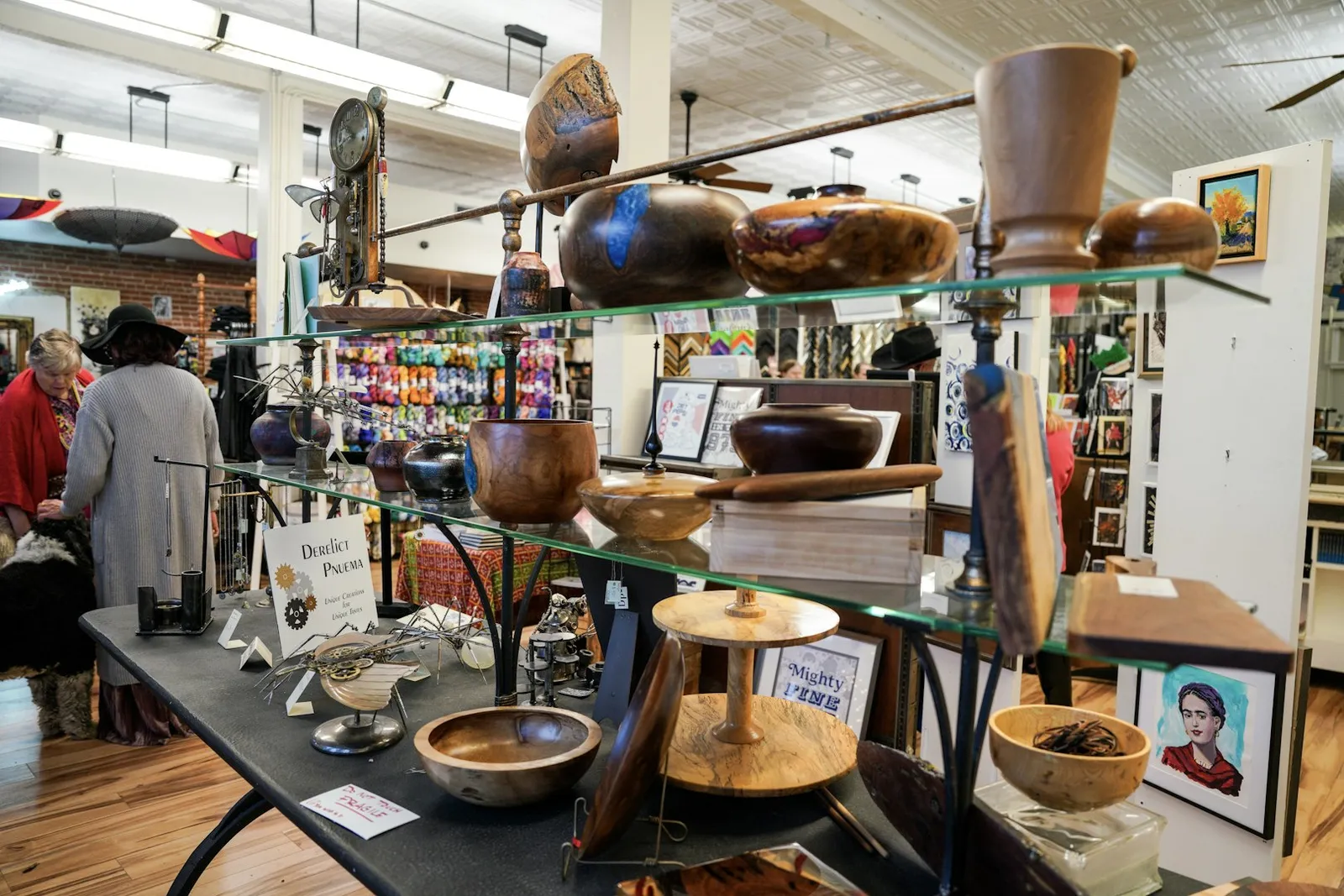
The Frame Gallery is a downtown storefront in Bryan, Texas, that has been framing and reframing artwork, photographs, posters, and diplomas for about three decades. Alongside the framing bench it runs a small gallery, hanging work by local artists and opening its doors for downtown event nights, so the shop functions as much as a place to look at art as a place to order a frame. Its customers are households and businesses across Bryan-College Station, and its work arrives largely by word of mouth and by people walking past the window.
The shop had recently changed hands and was steadying itself under new ownership when the engagement began. Around it, the framing category was shifting: mail-order and online framing services had made it possible to order a frame without ever meeting the person who cuts it, and a nearby university brought a steady flow of students, graduating classes, and student organizations that the shop had never marketed to directly.
Challenge
The Frame Gallery had served the Bryan-College Station community for about three decades with custom framing, reframing, and a small gallery space, but it had almost no presence online. With a new owner and a long list of ideas, the business wanted help deciding where to start: how to build a social media and web presence, how to reach a wider customer base including Texas A&M students, and how to make it easier for customers to start a framing order without visiting the store first. Framing is a discretionary purchase, and online framing services had made the category easy to shop from anywhere, so the question was not only which ideas were worth pursuing but which ones a small shop could carry out on its own, quickly, and keep up week after week.
How the team worked
The team met the owner in October, ran a SWOT analysis, and worked through the shop's existing Instagram and Facebook accounts page by page before proposing anything. A wide set of ambitions was narrowed into three SMART goals: social media and web presence, demographics and target market, and order standardization. With the goals fixed, the team set a working schedule and split the goals among its members so each one had an owner for the rest of the term.
Market research followed through late October. The team looked at how custom framing behaves as a discretionary purchase, at the growth of online framing services and what that meant for a shop whose advantage is in-person expertise, and at where a local gallery could hold ground that a mail-order competitor could not. That reading is what pushed the recommendations toward steady visibility and local relationships rather than one-off promotions.
A mid-November review with the client tested the early recommendations against what the shop could realistically run. Ideas that needed more time or money than the business had were set aside as longer-term, and the list was trimmed to three priorities the owner could start within weeks: a general marketing strategy, search visibility, and branding and online presence. The team then built each priority out into concrete tools and templates rather than advice.
The final deliverable, presented in early December, was written as a next-steps document rather than a report. Each recommendation names the tool to use, walks through account creation and setup screen by screen, links to a tutorial, and says plainly what the recommendation is for. The intent was that the owner could work down the document alone, in order, and stop at any point with something finished.
Workstreams
- Reviewed the business's existing Instagram and Facebook accounts, ran a SWOT analysis, and narrowed a long list of ideas to three priorities: a general marketing strategy, search visibility, and branding and online presence.
- Recommended a website platform and mapped the pages and features to build first, including a gallery of past framing work, a live Instagram feed, and QR codes linking displayed artwork to information about the artist.
- Wrote platform-by-platform guidance for Instagram, Facebook, and TikTok covering profile branding, posting rhythm, hashtags, a weekly engagement review, and content themes such as event reminders, artist features, and behind-the-scenes framing.
- Designed a social media giveaway format built around following, tagging, and sharing, timed to promote diploma framing ahead of graduation season.
- Outlined a Linktree hub, a content planning tool for scheduling posts to both platforms at once, and a Google interest form so customers could share contact details, frame size, and material preferences before coming in for measurements.
- Researched how the business could reach the Texas A&M student body and student organizations, and laid out the state vendor registration, certification, and university purchasing steps needed to become an approved campus supplier.
What the team found
- Custom framing remained a discretionary purchase, which made steady, ordinary visibility more valuable to the shop than any single campaign or promotion.
- Online framing services had widened what a customer could order from home, leaving in-person judgment, local artists, and a physical gallery as the shop's clearest points of difference.
- A review of the existing accounts showed the tone and imagery already read well, so a posting rhythm and clearer signals of where the shop actually is would do more than a redesign.
- Short-form video rewarded frequency and authenticity over polish, making it the most demanding channel considered and the one that works best only once a website is in place.
- Giveaways that ask entrants to tag and share travel further than ones that only ask for a like, and that format fits diploma framing in the run-up to graduation.
- Reaching student organizations at the nearby university turned on registration and certification steps rather than on marketing, so it was a paperwork route rather than a promotional one.
What the client received
- Next-steps document with step-by-step setup instructions for every recommendation
- Final presentation deck covering the three goals and the recommended solutions
- Website plan naming a template platform and the pages and features to build first
- Social media content and posting guide for Instagram, Facebook, and TikTok
- Giveaway template with entry rules and a winner-selection method
- Google interest form outline for standardizing framing inquiries
- Link hub and QR code setup instructions for artwork on display and social bios
- Campus vendor registration roadmap for reaching Texas A&M students and organizations
Outcome
The Frame Gallery left the engagement with a short, ordered list of next steps instead of a scattered set of ideas: a website plan, a posting rhythm and content themes for each platform, a giveaway format, a way to take framing inquiries online, and a route toward campus vendor status. Each recommendation came with the specific tool and the setup instructions needed to act on it without outside help, and the shop can now tell which ideas are quick wins and which belong to a later year.
Recommendations
- Build a standalone website first, using a template builder with free hosting, mobile formatting, and search tools, and start with a home page, an about page, and contact information.
- Add the shop's own material to the site over time: a gallery of completed framing jobs, a live feed from the social accounts, and QR codes beside displayed artwork that open information about the artist.
- Use a design tool with a content planner to build posts from templates and schedule them to both social accounts at once, so posting becomes a weekly task rather than a decision each day.
- Post to the feed and to stories on a set rhythm, mixing framing work in progress, artists and pieces on display, seasonal and event reminders, and the person behind the bench.
- Treat short-form video as a separate, longer commitment: open a business account for the analytics, post frequently, follow trends rather than polish, and review engagement weekly for the first month.
- Run a follow, tag, and share giveaway timed just before graduation to spread word of diploma framing, and publish an online interest form so a customer can send frame size and material preferences before coming in.
Next steps
- The client was handed a next-steps document that put the recommendations in priority order and walked through account setup for every tool named, with tutorial links at each step.
- The client was handed a giveaway format with entry rules, a winner-selection method, and the account settings needed to run it across both social platforms.
- The client was handed an outline for an online interest form covering contact details, frame size range, and material preferences, with precise measurement kept as an in-store step.
- The client was handed a registration and certification sequence for becoming an approved university supplier, plus where to watch for framing opportunities once approved.
The team
- Steven O'Connell, project lead
- Jacque Chan
- Jennifer Han
- Mo Tehrani
- Rebekah Franklin
- Syarief Shahab