Context
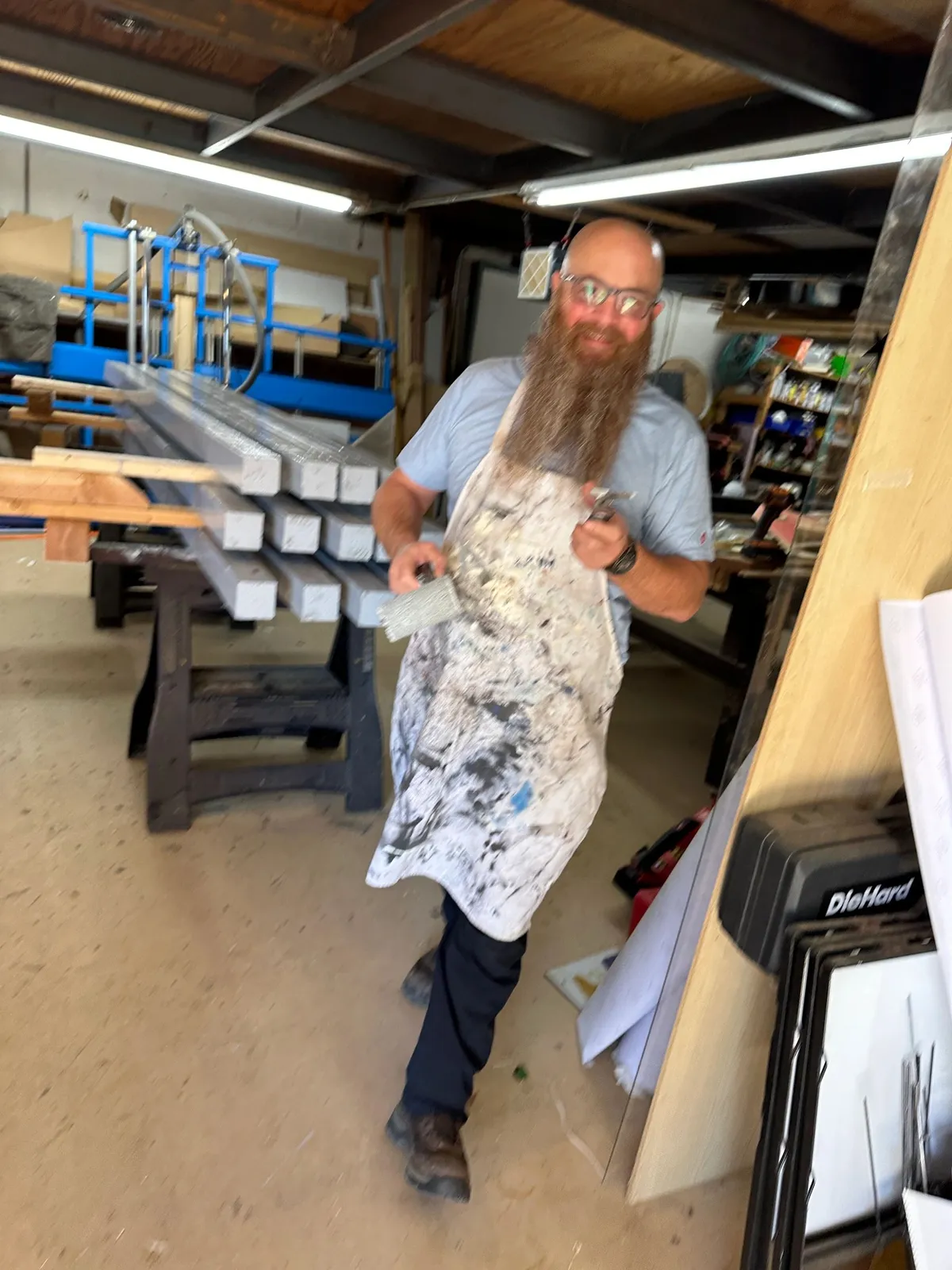
Sign Express is a sign shop based in College Station, Texas, serving businesses across the Bryan and College Station area and the surrounding towns. Its work covers channel letters, the raised illuminated lettering mounted on storefronts, along with sign permitting and installation, large format printing for banners, and vehicle wraps. Everything is designed and produced at a single retail location, and the same person who runs the business also makes the work. Customers begin most jobs by filling out a request form that describes the sign they want, the type of mount, and the building it will go on.
By the spring of 2024 the business had been operating locally for decades and was steady on referrals and repeat work, but the day to day rested heavily on one person: pricing, permitting questions, ordering, invoicing, and record keeping all ran through the same desk as the design and fabrication. The owner wanted the business to depend less on any one person's memory of how things are done, and asked for help finding where software and better records could take over the routine parts so more of the week could go to the creative work.
Challenge
Sign Express makes signs and vehicle wraps for businesses in the Bryan and College Station area. The owner wanted to spend more of the week on the creative side of the work and less on administration, but financial information lived in paper records and across several accounts, and there was no single view of how the business was doing. Quotes for custom signs were built from free-form descriptions of what a customer wanted and where it would be mounted, so a single inquiry could take hours to price. New work arrived mostly by referral, with no system for keeping track of past customers or following up on leads. TASK was asked to organize the numbers, recommend software that could take on routine tasks, and build a plan for reaching new customers.
How the team worked
After the first client meeting, the team received the business's financial documents and started by putting them in order, sorting the physical invoices and receipts into something that could be read at a glance. That work fed a financial health dashboard in Excel: charts and ratios tied by formula to the income statement and balance sheet so that the view stays current whenever the underlying figures change. The same sorted records became the starting data for accounts receivable and payable aging reports, with a note on which entries to refresh when a payment lacked a printed receipt.
The team then read the statements rather than just charting them, checking how income and costs were grouped, which service lines the work came from, and how the ratios compared with what is typical for a service business of this kind. Ratios that did not suit made-to-order production were set aside, and the ones that were kept came with a plain explanation of what each measures and which decision it informs, so the dashboard could be read without an accounting background.
In parallel, the team drafted a marketing plan and a business administration report. The marketing plan paired a low-cost CRM recommendation and step-by-step setup with an active outreach routine, a vehicle-wrap Instagram account, and a short list of website fixes such as a wider portfolio, working social links, images in the services section, and a pricing FAQ. The administration report compared four inventory and order-management platforms on features, yearly cost, learning curve, and whether they connected to the accounting tool already in use, then recommended the one that fit best on those terms.
The final deliverable closed with a phased implementation order: put the dashboard into daily use and digitize the remaining statements first, adopt new software in stages with time set aside for training and a trial period, then build the online presence and track it with simple website and social metrics before layering on outreach. Each phase was written so it could be started in whatever order the calendar allowed.
Workstreams
- Built an Excel financial dashboard that reads from the income statement and balance sheet, charts assets against liabilities and expenses by category, and recalculates key ratios as balances are updated.
- Sorted the business's physical invoices and receipts and set up accounts receivable and accounts payable aging reports that flag overdue balances automatically.
- Explained what each financial ratio means for day-to-day decisions and recommended a cost-tracking review and a request-for-proposal process for outside bookkeeping support.
- Laid out a plan to digitize bank, card, and investment statements and bring them into accounting software.
- Wrote a marketing plan covering CRM setup with a lead pipeline and email templates, in-person outreach to local businesses with worn or temporary signage, an Instagram presence built around vehicle wraps, and a list of website fixes.
- Compared four inventory and order-management platforms on features, cost, and compatibility with the existing accounting system, and recommended one.
What the team found
- Income came from several service lines rather than one, so the business was less dependent on any single kind of job than a shop built around one product would be.
- Discounting was light next to what is typical in the trade, which suggested that pricing held up on its own and that the limit on new work was reach rather than price.
- Income and cost categories were grouped broadly enough that the dashboard could not yet attribute results to a particular service line, which is what a closer look at cost tracking would open up.
- Standard inventory measures fit the business poorly, since most work is made to order rather than sold from stock, so the dashboard leaned on the ratios that suit custom production.
- Aging the receivables and payables turned a stack of paper into one ordered view, so unpaid invoices and outstanding bills can be read by how overdue they are rather than by searching.
- None of the platforms compared matched on every dimension: the one built for sign production did not connect to the accounting tool in use, while the general-purpose options traded depth for ease of learning.
What the client received
- Excel financial health dashboard with income statement, balance sheet, and ratio views
- Accounts receivable and accounts payable aging reports with automatic overdue flags
- Financial ratio guide explaining what each measure informs
- Cost-tracking review and bookkeeping recommendations, including a request-for-proposal approach
- Financial information digitization plan covering bank, card, and investment records
- Marketing plan covering CRM setup, active outreach, social media, and website fixes
- Business administration report comparing four inventory and order-management platforms
- Final written deliverable and presentation deck
Outcome
Sign Express now has a dashboard it can keep current from its own statements, aging reports for what it owes and is owed, a plain guide to what each ratio means for a day-to-day decision, a phased path for adopting new software, and a marketing roadmap that starts with the website and social media before moving to CRM automation and active outreach. The owner has a clearer read on business health, a way to compare bookkeeping help on equal terms, and a set of next steps that give time back to creative work.
Recommendations
- Review how costs are tracked so that decisions made from the statements rest on records that are complete and consistently categorized.
- Consider outside bookkeeping or accounting support, sought through a request for proposals that describes the work needed so responses can be compared on the same terms.
- Digitize the bank, card, and investment statements that still arrive on paper and bring them into accounting software, with a routine for keeping every account current.
- Adopt a low-cost CRM: contacts in one place, leads labeled by how warm they are, a starter pipeline, and a small set of email templates for first contact, follow-up, and past clients.
- Add active outreach to the week: time set aside to visit local businesses whose signage is worn or temporary, leaving contact details and asking permission to follow up.
- Build the online presence around vehicle wraps and fix the website, adding a wider portfolio, working social links, images in the services section, and a pricing FAQ.
Next steps
- The client was handed a phased implementation order that begins with putting the dashboard into daily use and digitizing the statements that are still on paper.
- The client was handed a staged approach to adopting new software, with time set aside for training and a trial period before the chosen platform is relied on.
- The client was handed a step-by-step CRM setup sequence, from free trial and contact import through pipeline, email templates, and a weekly review of what the analytics show.
- The client was handed a marketing order of operations that starts with the website and social presence, tracked with simple traffic and engagement measures, before outreach is layered on.
The team
- Tulsi Rampalli, project lead
- Aliyaan Killedar
- Amanda Hare
- Amey Halappanavar
- Binh Minh Duong
- Mark Smith
- Syarief Shahab