Context
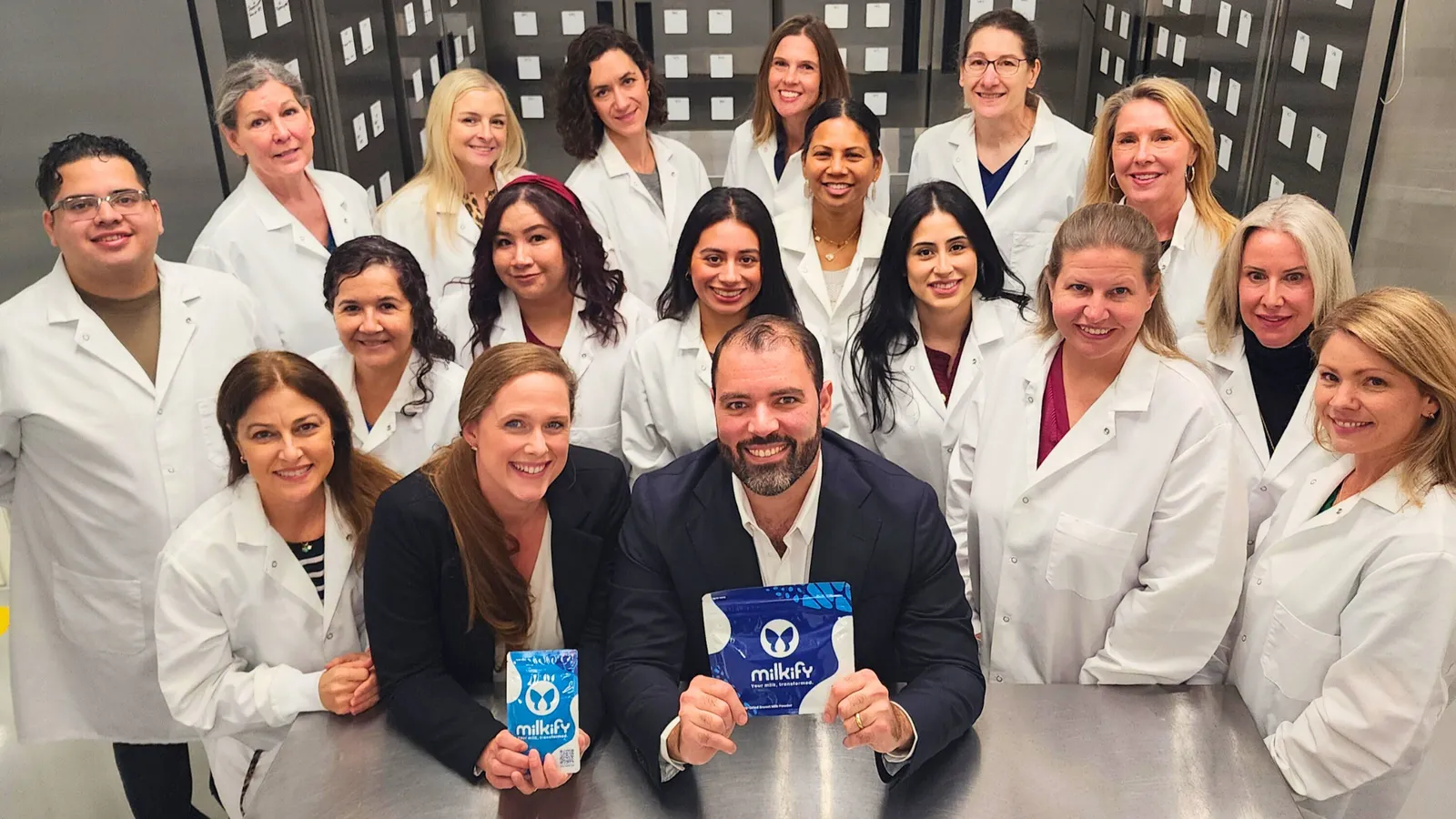
Milkify is a direct-to-consumer service that freeze-dries frozen breast milk into a shelf-stable powder, so parents can keep it for years, travel with it, and rehydrate it when their baby needs it. The company presents the process publicly as non-pooled and sterile, carried out in a facility that follows registered safety standards, and it ships to nursing parents rather than selling through retail. Its customers are largely professional women balancing demanding schedules against the storage and logistics of feeding an infant.
Around the engagement, two things were shifting. The measurement standard that its advertising account had been built on was retired by the platform, which changed how any paid campaign could be judged. At the same time, much of the company's growth was arriving through parenting communities and search rather than through paid channels, and that growth had never been organized or tracked as a channel in its own right.
Challenge
Milkify turns frozen breast milk into shelf-stable powder so parents can preserve, store, and travel with it. The business had already invested in Google Ads, Klaviyo email flows, and SEO, and was growing through word of mouth in parenting communities. The question was how to make those channels work together. Paid search reporting no longer matched what the store itself recorded, so the team was asked whether ad performance could be measured on a footing everyone trusted. Email and SMS reached a customer base the business already knew was specific, but the flows spoke to everyone in much the same way. Organic search brought people to the site without carrying them any further. Underneath all three sat one question: which customer should the business build around first?
How the team worked
The team split into three workstreams, one each for Google Ads, customer strategy and email, and search engine optimization, and kept them connected by treating the three as parts of a single customer journey from first search to repeat purchase. A shared weekly timeline set what each workstream owed the others, so segmentation work fed the email flows, and the search work fed the content that paid campaigns could not reach.
Every workstream opened with an audit of what already existed rather than a proposal. The advertising work traced each conversion action back to what it actually measured before recommending any change. The search work ran an independent audit across content, experience, authority, and indexation, then compared it against the audit the business already held, confirming what held up and noting what had been understated.
Customer strategy started from the analytics the business already collected about its own buyers, grouping them into segments and then reading behavior across those groups: what they were paying for, what reassured them, and where their routines broke down. Personas came out of that reading, and every messaging recommendation was written back to a specific motivation rather than to a general audience.
Recommendations were built to be implemented directly rather than admired. Conversion settings came with the exact sequence of steps, headline copy came written out slot by slot, the Klaviyo flows were rebuilt in the tool with the emails drafted inside them, and the search work arrived as a keyword spreadsheet, a content playbook, and an outreach guide the business could work through on its own schedule.
Workstreams
- Audited the Google Ads account, reclassified primary and secondary conversion actions, and laid out a step-by-step migration from retired Universal Analytics tags to Google Analytics 4 event tracking.
- Reviewed the competitor and Performance Max campaigns and recommended premium, brand-safe headline copy in place of Google's automated suggestions.
- Segmented the current customer base, identified healthcare professionals as the primary target with an alternative corporate and influencer path, and built an influencer compatibility tool.
- Redesigned the website pop-up flow and rebuilt Klaviyo email and SMS sequences so each segment enters a tailored, two-email communication path with rewritten copy.
- Designed a trackable Facebook group and referral strategy with structured incentives, and evaluated expansion markets before recommending working mothers as the next entry point.
- Conducted an SEO audit, developed intent-based keyword clusters by customer vertical, and created a three-stage content funnel and a backlink strategy focused on parenting and lactation communities.
What the team found
- Paid performance could only be read reliably once a single revenue action carried the optimization and every earlier funnel signal was kept for observation only.
- The advertising platform's own automated fixes pulled toward informal language and rival brand terms, the opposite direction from the premium positioning the business had built.
- Customer segments differed less in what they could spend than in what convinced them: some looked for clinical evidence, others for time saved and a simpler routine.
- The same pain points recurred across every segment, limited storage, crowded schedules, and uncertainty about safety, which pointed to one shared message carrying segment-specific proof.
- Search visibility and search conversion proved to be separate problems, since individual pages answered single questions well but were never linked into a path toward a decision.
- External links to the site came largely from business and media coverage rather than the parenting and lactation communities where this audience looks for reassurance.
What the client received
- Google Ads conversion audit with primary and secondary reclassification
- Step-by-step migration guide moving purchase tracking onto the current analytics standard
- Competitor campaign analysis with a full set of premium headline copy
- Performance Max campaign audit and a relaunch rule tied to working revenue tracking
- Customer segmentation analysis, personas, and primary target positioning
- Redesigned website pop-up flow with incentivized, step-by-step data capture
- Rebuilt Klaviyo email and SMS flows with a comprehensive list of rewritten emails
- Influencer compatibility tool with usage instructions
- Facebook group referral strategy, incentive structure, and infographic flyers
- SEO audit comparison, keyword targeting spreadsheet, content creation playbook, and backlink implementation guide
Outcome
Milkify now has a defined fix for its conversion tracking and a rule for when automated campaigns can be relaunched, headline copy that holds its premium positioning instead of following automated suggestions, a named primary customer segment with an alternative path if it chooses to pivot, rebuilt email and SMS flows that follow the segment a visitor selects, a way to see which communities its word of mouth actually comes from, and a content and backlink framework that connects search visibility to a purchase decision.
Recommendations
- Rebuild conversion tracking on the current analytics standard, keep one purchase action as the single primary goal, and hold every micro-conversion in an observation role.
- Leave the fully automated campaign paused until that tracking reports revenue accurately, and use a blended acquisition measure from the store's own records as the interim baseline.
- Fill the unused headline slots with the company's own premium differentiators, safety, speed, and processing quality, rather than accepting the platform's automated suggestions.
- Prioritize healthcare professionals as the primary segment and lead with clinical credibility, keeping corporate professionals and influencers as a defined alternative if positioning shifts toward convenience and visibility.
- Restructure the website pop-up so it captures the email first, then the use case, then an optional phone number, and route each selection into its own two-email Klaviyo path with SMS alongside.
- Treat community word of mouth as a measurable channel with unique codes per group, structured referral and feedback incentives, and a content funnel plus community backlinks supporting entry into the working-mother market.
Next steps
- The client was handed a step-by-step migration guide for its conversion tracking, written as an ordered set of actions to take inside the advertising account.
- The client was handed a full set of rewritten emails built on a two-message structure, already mapped into the updated Klaviyo flows and the redesigned pop-up.
- The client was handed an influencer compatibility tool with its own instructions, so prospective partners can be scored for fit before any outreach begins.
- The client was handed a keyword targeting spreadsheet, a content creation playbook, and a backlink implementation guide with an outreach workflow to work through in sequence.
- The client was handed a staged entry plan for the working-mother market, sequenced from brand awareness to professional referral sources to conversion tracking.
The team
- Adith Veetil, project lead
- Ashley Bajaj, Email Marketing, Klaviyo
- Erina Tejani, Email Marketing, Klaviyo
- Jamie Lee, Google Advertisement
- Sid Mooli, Search Engine Optimization (SEO)
- Mayra Luna, executive