Context
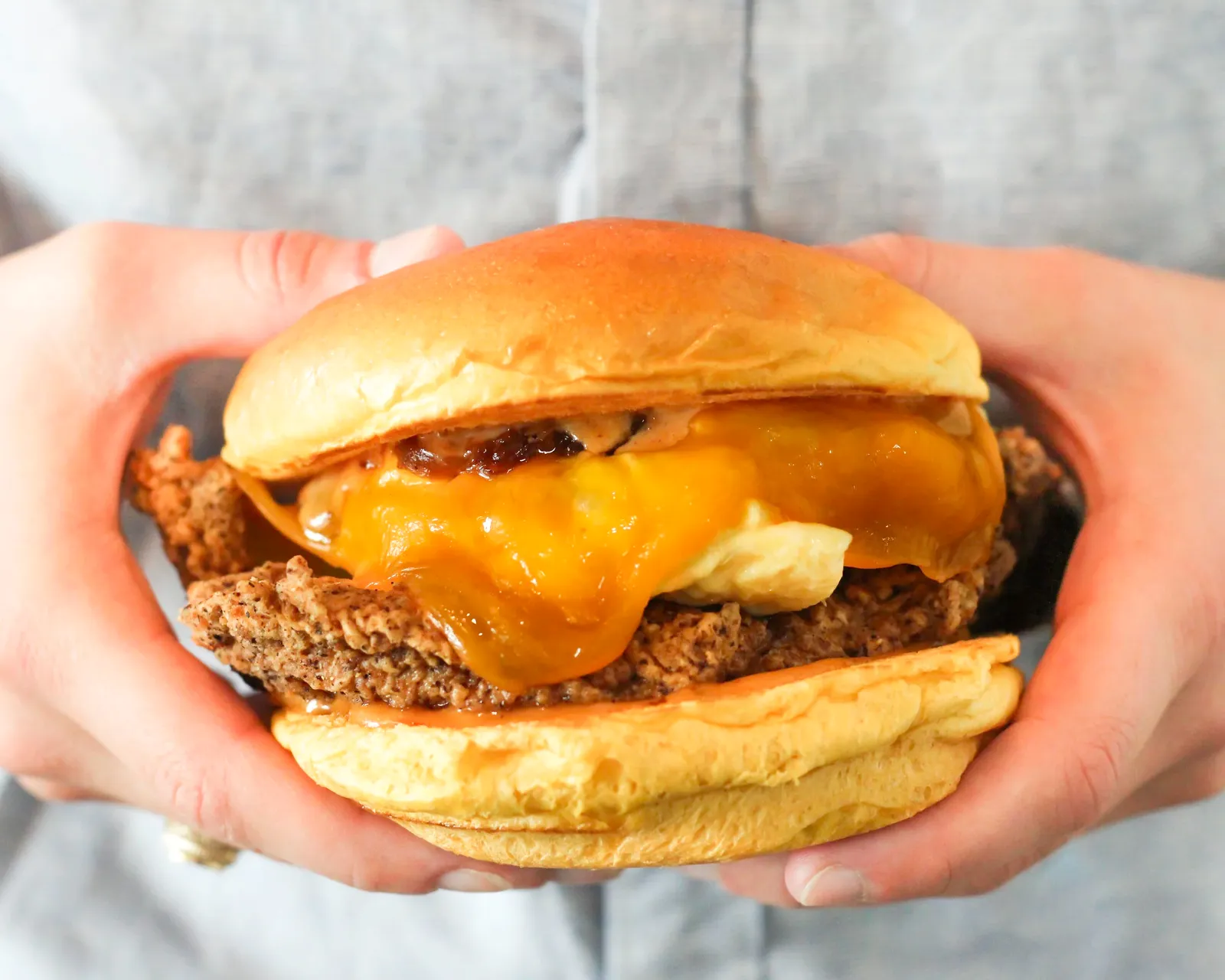
MESS Waffles is a creative comfort food restaurant in College Station, Texas, serving chicken and waffles, brunch plates, mac and cheese, french toast, and sandwiches from a single location in a mixed-use development near Texas A&M University. It started as a food truck before moving into a full restaurant space, and it occupies a niche with few direct competitors in the Bryan-College Station area, at prices meant to keep it an everyday option. It keeps a Squarespace website alongside Instagram, TikTok, Facebook, and Yelp profiles, and much of its following arrived through reviews and customer posts rather than advertising.
The engagement ran in spring 2022, by which point where to eat was largely decided on a phone: search results, review pages, and short video. Influencer partnerships had become an ordinary channel for small restaurants, and college athletes had only recently been permitted to sign name, image, and likeness deals, which opened a route to the student audience that had not existed a year earlier. The restaurant was also thinking past its own town, weighing larger Texas cities where it would be new and less established, while the audience at home turned over with the academic calendar.
Challenge
MESS Waffles had built its following in College Station through word of mouth, shared reviews, and reposted customer content rather than paid promotion. The restaurant was well known among foodies and people who like to try new things, but a large part of its audience, particularly college students, had yet to be reached, and earlier attempts at TikTok had not taken off. Growing the audience locally and nationally had proved difficult, and the business had spent little on sponsored or boosted posts, so anything recommended had to work without abandoning the organic approach that had carried it so far. The client also wanted the brand represented online as accurately as it comes across in the restaurant, and with larger Texas cities in view as a possible next step, wanted to know whether search visibility built for College Station would carry into a market where it was not yet known.
How the team worked
TASK began with the client's own framing: the restaurant was well known among foodies but wanted to reach more of the college-age market while keeping its organic style of marketing. The team built a SWOT analysis and a market analysis of the Texas A&M student population, then agreed four goals with the client: wider marketing reach, an accurate online representation of the brand, better search rankings and accessibility, and an Instagram overhaul.
From a longer list of ideas raised in meetings, the team narrowed the work to three areas that could be implemented quickly with low overhead: influencer marketing, SEO, and branding and online presence. Ideas that could not be developed fully inside the semester were set aside rather than half-finished, and noted for the client as things worth returning to. Each recommendation was grounded in published research on social media use and search behavior rather than anecdote, with the caveat stated plainly that general findings still have to be tested against one restaurant.
The search work started from observation rather than theory. The team ran the categories a hungry local would actually search across Google, Bing, and Yelp to see where the restaurant already placed, then read the site the way a search engine reads it: images without alt text or meta tags, the keywords the menu already ranked for against the dishes it does not, and the page descriptions that appear beneath a result, compared with how a national chain writes its own.
Branding and social recommendations were matched to the tools the restaurant already used, its Squarespace website and its existing Instagram account, so nothing required a rebuild. The team proposed a palette drawn from the food and the room, template-based design and scheduling tools to keep posting consistent, story highlights, a linked bio, and in-store QR codes, with an analytics service so the client could see for itself which posts were working.
The findings were presented to the client as a deck covering the business, the market, the agreed goals, and each recommendation in turn, then compiled and handed off as a written next-steps document in priority order, with an offer to stay in touch as the recommendations were put into practice.
Workstreams
- Recommended an influencer marketing approach centered on Instagram, covering how to find relevant food and lifestyle accounts and how to reach Texas A&M student athletes through the university's name, image, and likeness exchange.
- Audited the restaurant's search visibility across Google, Bing, and Yelp and outlined Squarespace-specific improvements: image alt text and meta tags, broader menu keywords, fuller page descriptions, and backlink building.
- Proposed a cohesive color scheme drawn from the food and the restaurant's ambiance, with Canva templates and a content planner to keep posts consistent across platforms.
- Reframed Instagram as a front door to the business, using story highlights for the menu, promotions, and events, a linked bio, and in-store QR codes pointing to the website and social accounts.
- Compiled research-backed guidance on posting frequency and timing, reels and video content, replying to and reposting customers, and connecting the TikTok and Instagram accounts, with an analytics tool for tracking what works.
What the team found
- The search check across engines and review sites showed the restaurant already placing near the top for the categories a local diner would search, so the opening was in a new market rather than the current one.
- Photography carried much of the site's appeal, but search engines read text, so images without alt text or meta tags stayed outside the results a hungry searcher browses.
- The keywords the restaurant ranked strongly for covered the dishes it is best known for, while several other popular menu items barely appeared in the text a search engine can index.
- The menu page description led with a single sauce, where a national chain used as a reference listed its best-known items by name in the same space.
- Off-page links were already in place across the review and social profiles the restaurant keeps, which made backlink building a byproduct of partnerships rather than a separate project.
- Instagram was where food content and food accounts performed best and where the college-age audience was most reachable, while TikTok offered wider reach when a post catches but far less predictability.
What the client received
- Written next-steps document covering influencer marketing, SEO, branding, and online presence in priority order
- Client presentation with SWOT analysis, market analysis, project goals, and social media strategy
- Squarespace SEO improvement checklist: alt text, keywords, page descriptions, and off-page links
- Search visibility review across Google, Bing, and Yelp for the categories the restaurant competes in
- Influencer and student-athlete partnership sourcing guide, including the university's name, image, and likeness exchange
- Proposed color scheme drawn from the food and the restaurant's ambiance, with the reasoning behind each color
- Design and content-planning tool recommendation for building posts and scheduling them across platforms
- Instagram playbook: story highlight categories, bio link, QR codes, posting cadence, and content types
- Analytics service recommendation for tracking profile and audience behavior across Instagram and TikTok
Outcome
MESS Waffles left the engagement with three practical, low-overhead marketing paths it could act on right away: a route to influencer and student-athlete partnerships, a Squarespace SEO checklist that also prepares the brand for expansion into larger cities, and a clearer, more cohesive way to run its Instagram presence. It also had confirmation that its search ranking in College Station was already strong, which meant search work could be treated as preparation for a new market rather than a repair, and a written record of how to describe the dishes it is known for on a page, a post, or a partnership.
Recommendations
- Make influencer marketing on Instagram the main route to the college-age and foodie audience, sourcing relevant accounts by hand through explore pages, hashtags, and other users' follower lists.
- Use the university's name, image, and likeness exchange to reach student athletes, whose followings sit largely within the student population and whose deals come with the school's contract support.
- Work through Squarespace's own SEO checklist, analyzer, and walkthrough video, and add alt text and meta tags to site images so search engines can place them in relevant categories.
- Broaden the keyword set and rewrite the page descriptions, especially on the menu page, so they name the dishes the kitchen is known for rather than a single item.
- Adopt a cohesive color scheme drawn from the food and the room, and build posts from templates in a design tool with a content planner so posting stays consistent across platforms.
- Treat Instagram as a proxy for the business itself: story highlights for menu, promotions, and events, a linked bio, in-store QR codes, replies and reposts of customer content, a connected TikTok account, and a posting rhythm set around midday meal times.
Next steps
- The client was handed a written next-steps document covering influencer marketing, SEO, and branding and online presence in priority order, with the reasoning and reference material behind each recommendation.
- The client was handed the sourcing routes for partnerships: how to find relevant food and lifestyle accounts by hand, and how to reach student athletes through the university's exchange platform.
- The client was handed a Squarespace-specific SEO checklist, pointed at the platform's own guide and video and at the steps for carrying image metadata onto the site.
- The client was handed an Instagram playbook covering palette, story highlight categories, bio link, QR codes, posting cadence, and content type, along with an analytics service for tracking what works.
- The client was handed an open line to the team, with an invitation to raise questions as the recommendations were put into practice.
The team
- Steven O'Connell, project lead
- Astrid Morua
- Ava Melaerts
- Dylan Chin
- Jordyn Churchwell-Garcia
- Marcus Chan
- Ramyani Roy