Context
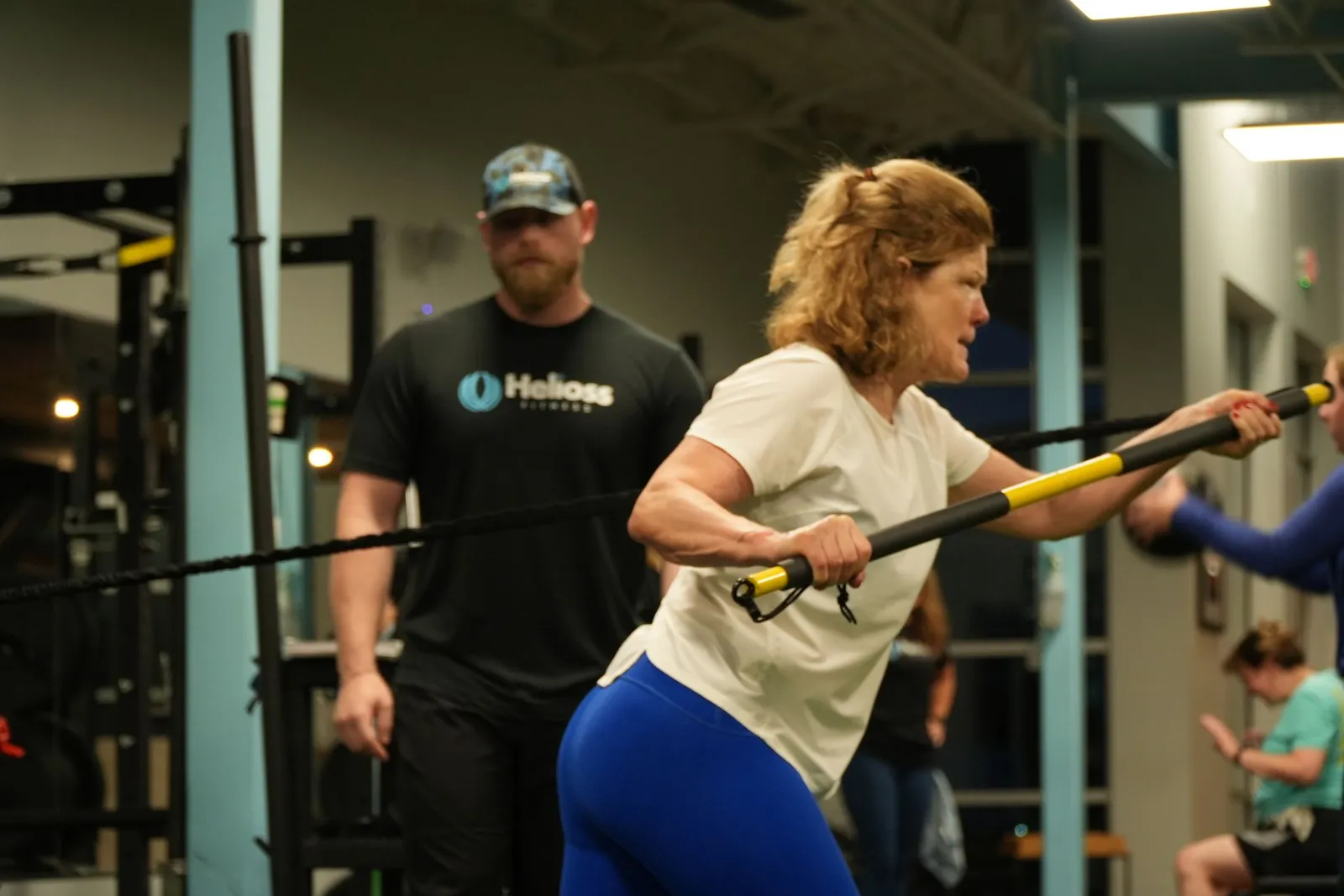
Helioss Fitness ran an open-concept personal training studio in College Station, Texas, built around experienced trainers and a floor fitted with functional training and cardio equipment. The studio sold coaching as a guided, one-to-one service rather than a membership floor, and most of its clients came from the surrounding Bryan and College Station area. Alongside the in-person offer, the business had begun putting its coaching online, which opened it to people well beyond driving distance of the building.
The studio operated in a local market shared with national and regional fitness chains that carry far more advertising weight, and in a college town where a large share of the population turns over on an academic calendar. Owner-run administration, including payroll, sat alongside the coaching work rather than apart from it. The questions in front of the business were about reach and about time: how to be visible to the right local audiences, and how to keep back-office routines from taking hours better spent with clients.
Challenge
Helioss Fitness ran an open-concept personal training studio in College Station with experienced trainers and purpose-built functional training and cardio equipment. The owner wanted to grow the client base, bring the studio's online training offer to more people, and spend less time on administration. Three questions framed the engagement: how to reach the right local audiences in a market shared with much larger fitness chains, how to become easier to find when people search for training nearby, and how to make payroll processing faster and more reliable. Each answer had to be weighed against what it would cost the studio in time, money, and attention to actually run, since the same person coaching clients was also handling the back office.
How the team worked
The team started by listening to what the owner most wanted to change, then narrowed the semester's work to three concentrations: marketing and brand presence, online visibility, and payroll processing. A cost-benefit framework, informed by research on the Bryan and College Station fitness market, kept each recommendation tied to what it would cost in time and money to implement, and to how a studio of this size compares with the larger chains operating nearby.
On marketing, the team combined a profile of the existing client base with ArcGIS Business Analyst research to choose target areas, then wrote channel-by-channel recommendations for Facebook, Instagram, TikTok, and email. Each channel came with a concrete tactic rather than a principle: giveaway mechanics, story highlight structure, hashtag mix, and email capture on the site. A plain-language social media guide sat alongside the plan so the studio could carry the posting work forward on its own.
On online visibility, the team ran the studio's website through a public audit tool and turned the results into a ranked list of technical fixes grouped by on-page, social, and usability. Each item said what to change and why search engines read it that way, so the owner could hand the list to whoever maintained the site. The team paired that organic work with an explanation of how Google Ads and the Google Display Network operate, including how bidding, keyword choice, and daily budget caps work, aimed particularly at the online coaching offer.
On payroll, the team built a macro-based tool that sorts, filters, and checks payroll data in one step and flags rows likely to cause an error. It compared that flow against the studio's current process, then worked through a software compatibility constraint: the macro needs a Microsoft spreadsheet environment, which the studio did not yet run. The team mapped subscription and one-time license options so the owner could choose, and was candid about which steps would still be manual and where further automation could go next.
Workstreams
- Researched the Bryan and College Station fitness market and built a cost-benefit framework to weigh each marketing option against what it would take to run.
- Profiled the studio's current client base and used ArcGIS Business Analyst to identify the neighborhoods and audiences most worth targeting.
- Developed a marketing plan covering Facebook, Instagram, TikTok, and email, with giveaways, review-generation promotions, student organization outreach, campus bus advertising, and partnerships with nearby health-focused businesses, plus a social media how-to guide for day-to-day posting.
- Audited the studio's website for on-page, social, and usability issues and wrote specific fixes for meta descriptions, header tags, keyword consistency, image alt text, structured data, and mobile page speed.
- Outlined how Google Ads and the Google Display Network could put the studio's in-person and online coaching in front of people already searching for training.
- Built a spreadsheet macro that sorts and filters payroll data automatically and flags entries likely to cause errors, and mapped the software licensing needed to run it alongside the studio's existing tools.
What the team found
- Research on the local fitness market showed that visibility, more than facilities or trainer experience, separated the studios that surfaced first in local search from those that did not.
- Profiling the existing client base against ArcGIS Business Analyst mapping pointed to specific neighborhoods around Bryan and College Station where the studio's likeliest audience was concentrated.
- The audience split into two groups the studio could address differently: nearby residents looking for guided training, and students who move through the area on an academic cycle.
- The website audit showed that search visibility rested less on how the site looked than on the structural markup and header hierarchy that search engines actually read.
- Review activity turned out to be a lever the studio already had within reach, since local search favors steady, recent reviews from people who already train there.
- Comparing the manual payroll routine against an automated one showed that most of the effort went into sorting and checking rows, which is the part a spreadsheet can do on its own.
What the client received
- Written final deliverable covering background research, marketing plans, online presence, and payroll optimization
- Final client presentation deck structured around the three concentrations
- Cost-benefit framework comparing each recommendation against what it would take to run
- Marketing plan with channel-by-channel recommendations for social, email, and physical advertising
- Social media how-to guide covering stories, highlights, hashtags, and ad targeting basics
- Website SEO audit with prioritized on-page, social, and usability fixes
- Paid search and display advertising guide covering Google Ads and the Google Display Network
- Payroll data sorting macro that flags error-prone entries, with license options for adoption
Outcome
Helioss Fitness left the engagement with a marketing plan matched to its local audience and to the student population around it, a step-by-step list of website changes to improve its search visibility, a clear view of paid search options for its online coaching, and a working payroll automation tool with the software path needed to adopt it. The owner could see what each option would take to run, which pieces the studio could start on its own, and where the payroll work would still need a hand.
Recommendations
- Concentrate marketing on the channels the research favored, Facebook, Instagram, TikTok, and email, with a set annual budget and a posting rhythm the studio can hold week to week.
- Run recurring giveaways and review promotions: incentives for followers who tag friends and share posts, and a small offer for clients who leave a public review after a session.
- Reach the student market directly through campus channels: student organization partnerships, campus bus advertising, and cross-promotion with nearby health-focused food businesses.
- Work through the website audit in order, starting with the meta description, a single top-level header, layered subheadings, consistent keywords, and image alt text, then canonical and robots files, structured data, and mobile page speed.
- Test Google Ads and the Google Display Network for the online coaching offer, starting with capped daily budgets and keywords tied to how people search for training in the area.
- Adopt the payroll macro once a compatible spreadsheet license is in place, choosing between the subscription and one-time purchase options mapped out in the deliverable.
Next steps
- The client was handed a written deliverable and presentation that keep the three concentrations separate, so the marketing, website, and payroll work can be picked up in whatever order suits the studio.
- The client was handed a social media how-to guide covering stories, highlights, hashtag mix, and ad targeting, written so someone inside the studio can run the posting without outside help.
- The client was handed a ranked website fix list, each item paired with the reason search engines weigh it, ready to pass to whoever maintains the site.
- The client was handed the payroll macro along with the license options needed to run it, and a note on which steps stay manual and where further automation could go next.
The team
- Yusuf Falola, project lead
- Anjuli Perubhatla
- Ethan Niedzwiedz
- Ngan Vu
- Sankarshana Mukundhan
“They were extremely professional throughout the duration of the project. Communication was on point. They listened to my areas of concern, and completely addressed them with their recommendations.”