Context
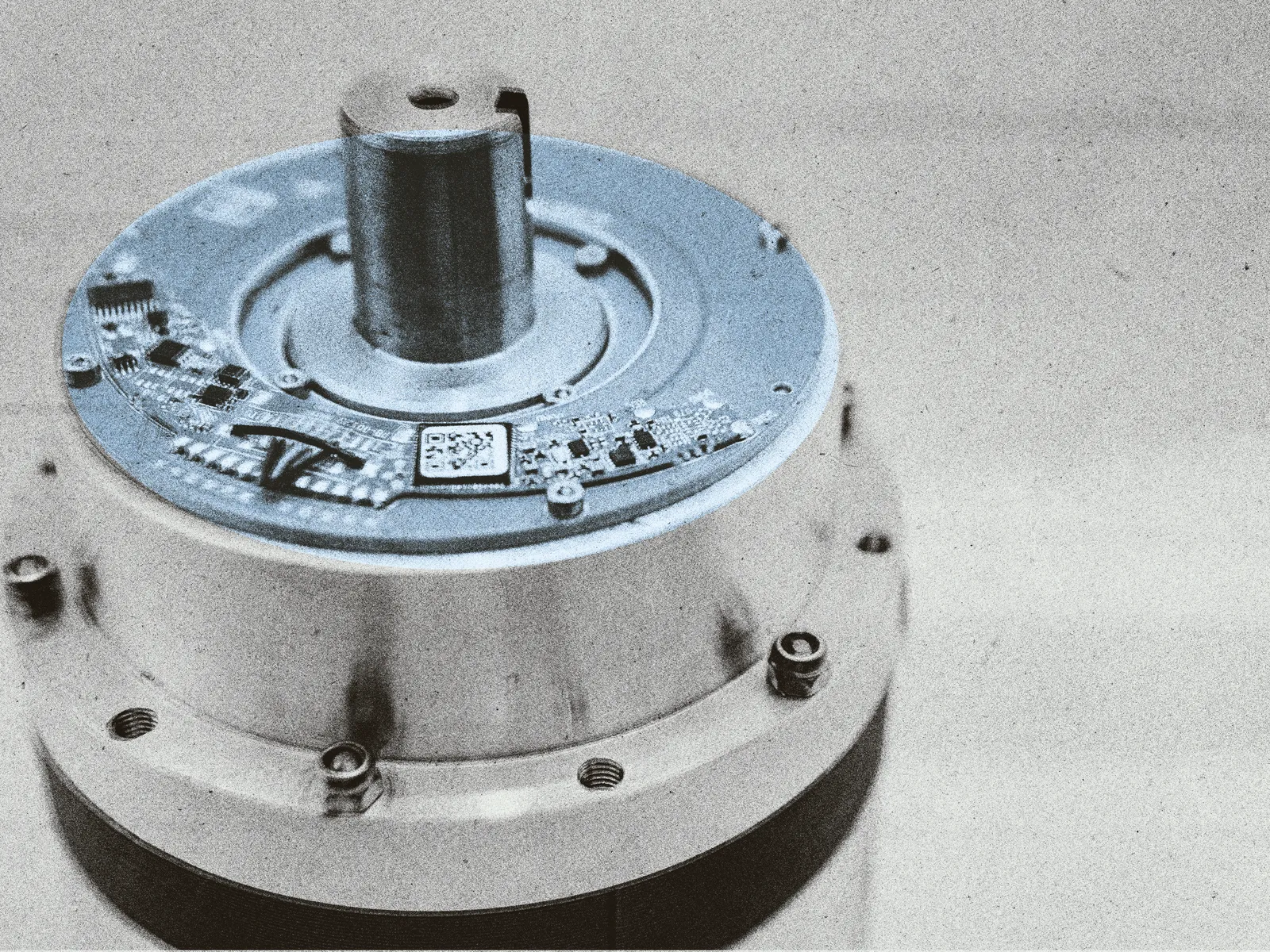
FluxWorks develops magnetic-drive technology for controlling motion in machines. Its core product, the Celestial Gear, is a contactless magnetic gearbox: torque passes between rotating parts through magnetic coupling rather than meshing teeth, so the drive runs without lubrication, without mechanical wear, and without generating particles. It holds performance across a wide temperature band, protects itself by slipping rather than breaking when a load spikes, and can be tailored to a given application. A torque-sensing add-on reads load directly at the gear, which makes the force inside a sealed machine visible while it is running. The company sells into equipment builders and manufacturers rather than to end users.
By spring 2026 the company was moving out of a research and engineering phase and into manufacturing, with pilot builds in front of it and commercial production expected to follow. The industries around it were moving too: demand for semiconductors was climbing with artificial intelligence and connected devices, humanoid robotics was drawing attention and capital while real deployments stayed early, and precision manufacturing across sectors was leaning harder on automation. Where a small supplier of a new drive architecture should aim first was the open question.
Challenge
FluxWorks develops magnetic-drive technology built around the Celestial Gear, a contactless magnetic gearbox that transmits torque without mechanical wear, lubrication, or particle generation, with a torque-sensing add-on that reads load directly at the gear. The company wanted to know which secondary markets fit the technology best, who it would actually be competing with in those markets, and what planning system its operations would need as production scaled from pilot builds toward commercial volume. Each market carried its own entry question: how long qualification takes, what an incumbent's place on a customer's approved vendor list means for a newcomer, and whether to sell a component or a larger motion package. In operations, a full enterprise system was already ruled out, leaving the question of whether a planning tool alongside the accounting software could carry the ramp.
How the team worked
Six consultants worked with FluxWorks over the spring semester and organized the engagement into five workstreams: semiconductor market and opportunity analysis, humanoid market research, shape-cutting industry analysis, a competitive analysis of magnetic gearboxes, and MRP system evaluation. A master timeline set each workstream a question to answer every week, and the work moved from industry overview to requirements, to technology fit, to a hypothesis that had to be defended or dropped. The team visited the FluxWorks facility in person, which deepened its understanding of the company's operations, and the executive overseeing the project gave guidance and feedback throughout that shaped both the approach and the final deliverables.
On the market side, each candidate industry was worked the same way: describe the process the gear would sit inside, list what that process demands of a gearbox, and compare those demands with what the Celestial Gear and its torque-sensing add-on actually do. Semiconductor manufacturing was broken down step by step, across patterning, deposition, etch, implantation, polishing, inspection, and cleaning, until one process, chemical-mechanical planarization, stood out for having a pain point the technology addresses directly. Shape cutting was worked from the cutting method down to the gearbox type, then narrowed to the applications where precision, not price, decides.
The competitive analysis reframed the question from who else makes magnetic gears to who FluxWorks would need to displace, sit beside, or route around on an approved vendor list. The team sorted the field into five layers, judged each by its threat to the semiconductor strategy rather than by its size, and used that ranking to write three recommendations, each answering a specific pressure point in that map. Where the analysis could not settle a question, such as whether the gear's shielding would satisfy a magnetically sensitive process, it said so and named the testing that would.
On the operations side, the team started from the client's own account of how a build is triggered, how a bill of materials is finalized, and how parts are ordered, then built a requirements baseline from it. From a broad set of MRP tools, including ones the client had already considered, it narrowed to three finalists and compared them on functional fit, multi-level bill-of-materials depth, inventory control, purchasing, integration with the existing accounting software, ease of use, and room to scale. The final report and presentation closed with the go-live risks for the recommended system and how each could be mitigated.
Workstreams
- Researched the humanoid robotics market, compared joint and actuator requirements against the Celestial Gear's characteristics, and identified hospital-logistics and assistive medical robotics as the better-aligned segment should the company pursue robotics.
- Analyzed the shape-cutting industry across laser, waterjet, and plasma CNC systems and the planetary gearboxes they depend on, then narrowed the opportunity to high-precision applications and the optics industry.
- Worked through semiconductor manufacturing step by step and identified chemical-mechanical planarization as the strongest entry point, with wafer dicing and lithography mapped as later paths.
- Organized the competitive set into five layers, from precision drivetrain incumbents on approved vendor lists to integrated motion suppliers and other magnetic gear developers, and ranked each by its threat to the CMP strategy.
- Evaluated material requirements planning systems against multi-level bill-of-materials, inventory visibility, purchasing, and accounting-integration criteria, then recommended one system with an implementation sequence and a go-live risk plan.
What the team found
- In the semiconductor polishing step, the state of a wafer cannot be observed while the process runs, so operators work from readings taken well away from the point of contact.
- The contact-based drives used in that step deform gradually under sustained load, and the drift is difficult to catch before it shows up in the finished wafer.
- Across all three candidate markets, the gear's advantages counted most where lubrication, particle generation, and unplanned downtime carry real cost, and least where unit price settles the purchase.
- Humanoid developers buy complete actuator packages rather than gearboxes on their own, which leaves a supplier of a single component fewer ways into the platform.
- In shape cutting, gearboxes are mass produced to standard designs for many industries at once, so the fit was strongest in the high-precision corner of the market rather than the general one.
- The competitive pressure came less from other magnetic gear developers than from established precision drivetrain suppliers already qualified onto tool makers' approved vendor lists.
What the client received
- Humanoid robotics market research with a technology-fit assessment and a deferred-entry recommendation
- Medical robotics entry route mapped as the alternative should robotics be pursued
- Shape-cutting industry analysis across laser, waterjet, and plasma systems, with an optics-industry recommendation
- Semiconductor market analysis centered on chemical-mechanical planarization, with dicing and lithography as alternate paths
- Five-layer competitive map of the magnetic gearbox field, ranked by threat to the entry strategy
- Three strategic recommendations drawn from the competitive analysis, each tied to a specific pressure point
- Requirements baseline for the planning system, covering bills of materials, inventory, purchasing, and reporting needs
- MRP system evaluation with a shortlist comparison, a recommendation, an implementation sequence, and a go-live risk plan
- Written final report and final presentation deck
Outcome
FluxWorks now has a ranked view of its secondary markets: semiconductor CMP as the primary target, shape cutting and the optics industry as a secondary path, and humanoid robotics deferred until that market matures, with a medical route mapped should it be pursued. It has a competitive position it can argue, built on wear elimination, overload protection, and in-process torque visibility rather than catalog specifications, and a view of what qualification onto an approved vendor list would ask of it. On the operations side it has a recommended planning system, a sequence for putting it in, and a plan for the risks that come with go-live.
Recommendations
- Lead with semiconductor chemical-mechanical planarization as the beachhead, where an unsolved measurement problem maps onto the technology and demand concentrates among a small set of tool makers.
- Compete on total cost of ownership and in-process visibility rather than catalog specifications, since wear elimination, overload protection, and real-time torque data are the dimensions the incumbent catalog does not emphasize.
- Sell an integrated package of gear, sensing, and controls into that market rather than a bare gearbox, accepting longer sales cycles in exchange for a position the incumbent cannot easily match.
- Treat shape cutting as the secondary path, aimed at the high-precision end and the optics industry, where the gear replaces the planetary drives inside polishing, assembly, and inspection systems.
- Defer entry into humanoid robotics until the market matures, and if it is pursued, enter through hospital logistics and assistive medical robotics, where sterility, quiet operation, and overload protection are already valued.
- Adopt a planning system that sits alongside the existing accounting software rather than a full enterprise system, using phased implementation and parallel running to carry the ramp.
Next steps
- The client was handed a ranked market sequence: the polishing step first, with wafer dicing and lithography set aside as follow-on paths once a first foothold exists.
- The client was handed an implementation sequence for the recommended planning system, covering the order of data migration, a small test set before full load, a cutoff date, and a training approach.
- The client was handed a go-live risk list with a mitigation for each item, from integration with the accounting ledger through data accuracy to adoption by the people who would use the system daily.
- The client was handed the open questions that gate the later paths, including the dedicated testing and formal qualification a magnetically sensitive process would demand before that route could be judged.
The team
- Rachel Lee, project lead, MRP system evaluation
- Brandon Rottinghaus, Shape cutting (SC) market
- Isabella Hurtado, Humanoid robotics market
- Trevor Von Wupperfeld, Semiconductor market
- Vaishnav Karnavar, Magnetic Gearbox Competitors
- Gopika Nair, executive