Context
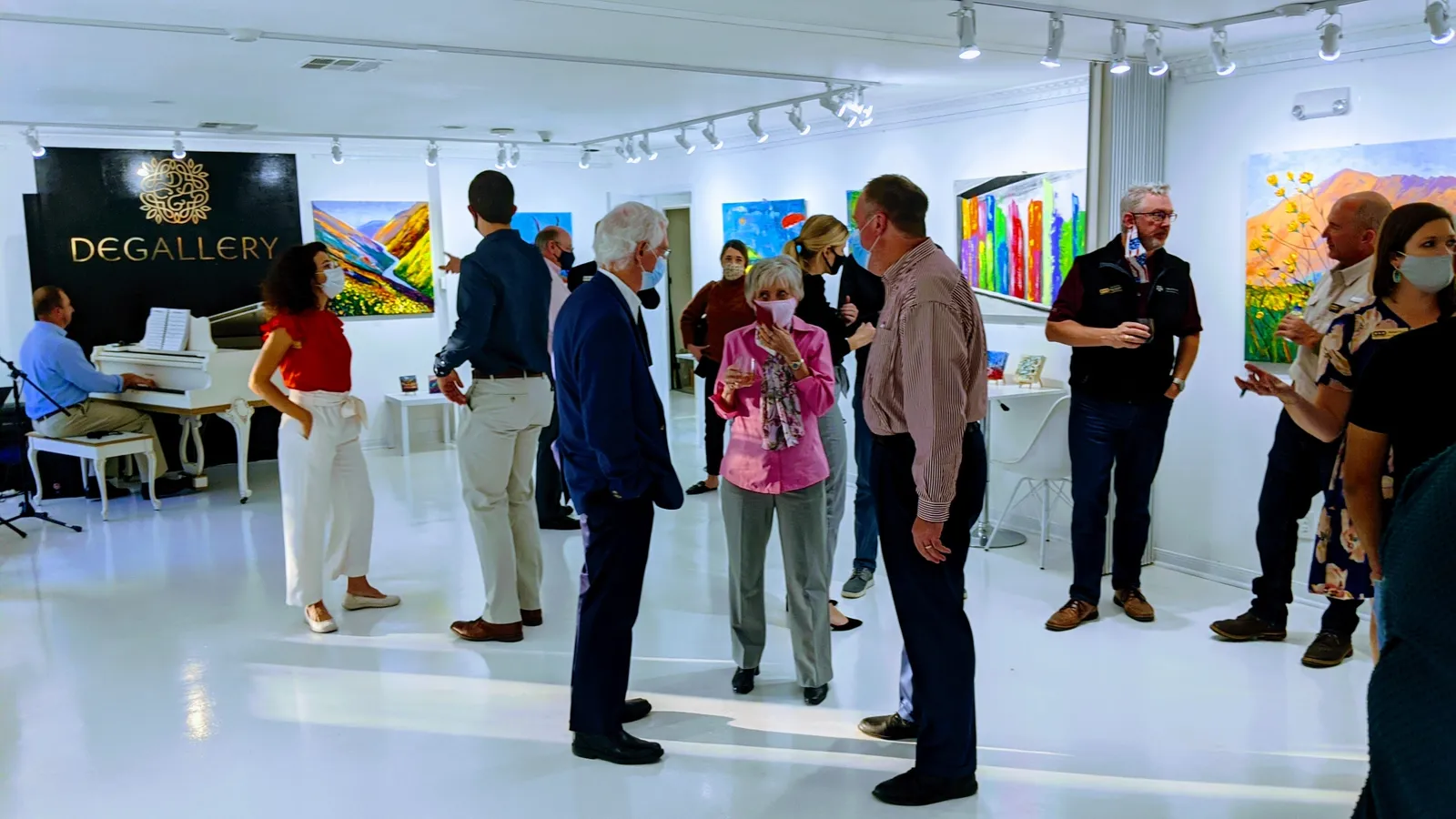
DeGallery is an art gallery and event venue in Bryan/College Station. It sells original work, teaches art classes for children and adults across a wide range of subjects and skill levels, hosts birthday, corporate, and homecoming parties, rents its room and grounds for personal projects and photography, and runs a recurring Saturday art market that brings visiting vendors onto the property. The gallery also carries connections into the international art world and works with artists of many backgrounds, which shapes both the work on its walls and the classes it offers.
The gallery sits in a university town, where the academic calendar sets the rhythm of local foot traffic and where student organizations, families, and businesses all book event space. Nearby retail districts draw weekend crowds, downtown small businesses promote one another closely, and paint-and-sip style venues compete for the same group bookings. By late 2021 the business had steady demand and the conventional marketing channels covered, and was looking for its next audience rather than its first.
Challenge
DeGallery runs an art gallery, art classes, and an event venue in Bryan/College Station, and wanted to make fuller use of its event space and bring more customers through the door. The business already had a mobile-friendly website, directory listings, and active paid advertising in place, so the conventional marketing checklist was largely covered. The question for TASK was what original, practical ideas could extend the gallery's reach beyond the marketing it had already tried, and how the venue could fill up at a pace the business could sustain. The team also had to work within what the space itself allowed: a room suited to smaller gatherings, grounds the gallery could stage, and a town whose calendar moves with the university.
How the team worked
The team began by working with the client to understand what the business most needed: better use of the venue space and more customers through the door. Early meetings covered how the space was booked, what the gallery already advertised, and which audiences it served. The team then split follow-up research across competing venues and opportunities, event planning services, venue directories, mobile booking, and costs.
From that base the team researched how event venues in a university town are marketed and brought a first round of recommendations to the client. Much of it covered ground the gallery had already handled, including website and mobile compatibility, directory listings, and paid advertising. The team treated that as a useful result, stepped back, and reset the brief rather than repeating work the business had done.
The second round looked for less conventional routes to new customers: the student population and the organizations that book social events, neighboring businesses that could cross-promote, and outside funding open to arts organizations. Each idea was checked against what the venue could actually host and when the surrounding calendar would support it, so the recommendations came tied to specific seasons, formats, and points of contact.
The final recommendations were organized into three areas: expanding the customer base and marketing, acquiring vendors and business partnerships, and additional financial assistance. The team presented them in a December deck and followed with a fuller written deliverable carrying supporting links, contacts, and an appendix of student organization outreach material.
Workstreams
- Reviewed the gallery's existing website, mobile presence, and advertising to establish which conventional marketing steps were already covered, then focused the work on ideas that went beyond them.
- Compiled a directory of student organizations at Texas A&M and outlined how and when to approach them about hosting paint parties and social events at the venue.
- Identified new formats for the event space, including etiquette classes for students preparing for interviews, a pop-up art event in a high-traffic local retail district timed to busy campus weekends, and themed painting nights tied to holidays.
- Proposed partnerships with neighboring small businesses through coupon exchanges, a shared punch card, and co-hosted culturally themed art classes catered by local restaurants.
- Outlined selling artwork to businesses for in-store display, with a label or QR code crediting the artist and the gallery.
- Researched grant and funding programs for community arts organizations and international cultural exchange, and compiled the relevant resources with links.
What the team found
- Comparable event venues in the area were built for larger gatherings, while the gallery's space suited smaller bookings and came with setup, cleanup, and photography alongside the room.
- The conventional marketing playbook was already in place at the gallery, from a mobile-friendly site and directory listings to paid social and search advertising, so ordinary recommendations had little left to add.
- Student organizations booked social events at venues around town throughout the year, and paint-class venues of a similar size already worked with them, which pointed to an audience the gallery could approach directly.
- Foot traffic in the area's busiest retail district peaked on weekends, and the university calendar concentrated visitors around traditions such as ring days, graduation, and move-in.
- Small businesses nearby cross-promoted heavily with their closest neighbors, so partnership ideas worked better designed as a group scheme than as one-off arrangements.
- As an arts organization with community programming and international artist connections, the gallery matched the eligibility language used by several public and foundation grant categories.
What the client received
- Written final deliverable with recommendations across customer expansion, business partnerships, and funding
- Final presentation deck walking the client through each recommendation area
- Directory of Texas A&M student organizations for venue outreach, with guidance on reaching social chairs
- Menu of new event formats for the space, including etiquette classes, pop-up events, and themed painting nights
- Partnership models for neighboring businesses: coupon exchange, shared punch card, and co-hosted theme days
- Curated list of arts grant and funding programs with links and application starting points
Outcome
DeGallery left the engagement with a set of original, ready-to-act ideas for its venue: a directory for reaching student groups, a menu of new event formats it can schedule around the campus calendar, partnership models it can propose to nearby businesses, and a shortlist of arts funding programs to explore. The recommendations were grouped so the business could weigh them one at a time rather than as a single plan, and each came with the contacts or links needed to take a first step. TASK planned to follow up in the spring on implementation.
Recommendations
- Offer paint parties to student organizations, asking each group for its social chair and making contact early to mid semester so the group has time to work out logistics internally.
- Book a slot on the rentable green space in the area's busiest retail district for a pop-up display or children's art class, timed to a weekend when the university calendar is drawing crowds.
- Add programming that fits the local calendar: cotillion or etiquette classes for students preparing for interview dinners, themed painting nights tied to seasonal holidays or subjects, and outreach to the student newspaper's life and arts section.
- Extend the existing flyer swaps with neighboring businesses into a coupon exchange, giving each partner a distinct coupon so the gallery can tell which partnerships bring people in.
- Build on that with a shared punch card across participating small businesses, rewarding customers who visit every location and giving the group a reason to promote one another.
- Co-host theme days with culturally themed food venues, pairing an art class in one style with catering, and sell artwork to businesses for in-store display with a label or QR code crediting the artist and the gallery.
Next steps
- The client was handed a compiled directory of prominent student organizations, with guidance to ask for each group's social chair and to reach out early in the semester.
- The client was handed a written deliverable split into customer expansion, partnerships, and funding, so each idea could be picked up on its own rather than as one plan.
- The client was handed links and program names for community arts and international cultural exchange funding, with the first office to contact for each one.
- The client was handed an open line back to TASK, which planned a spring follow-up to see how implementation was going.
The team
- Jacqueline Gold, project lead
- Caitlin Do
- Hayden Demny
- Justis Morales
- Mark Smith