Context
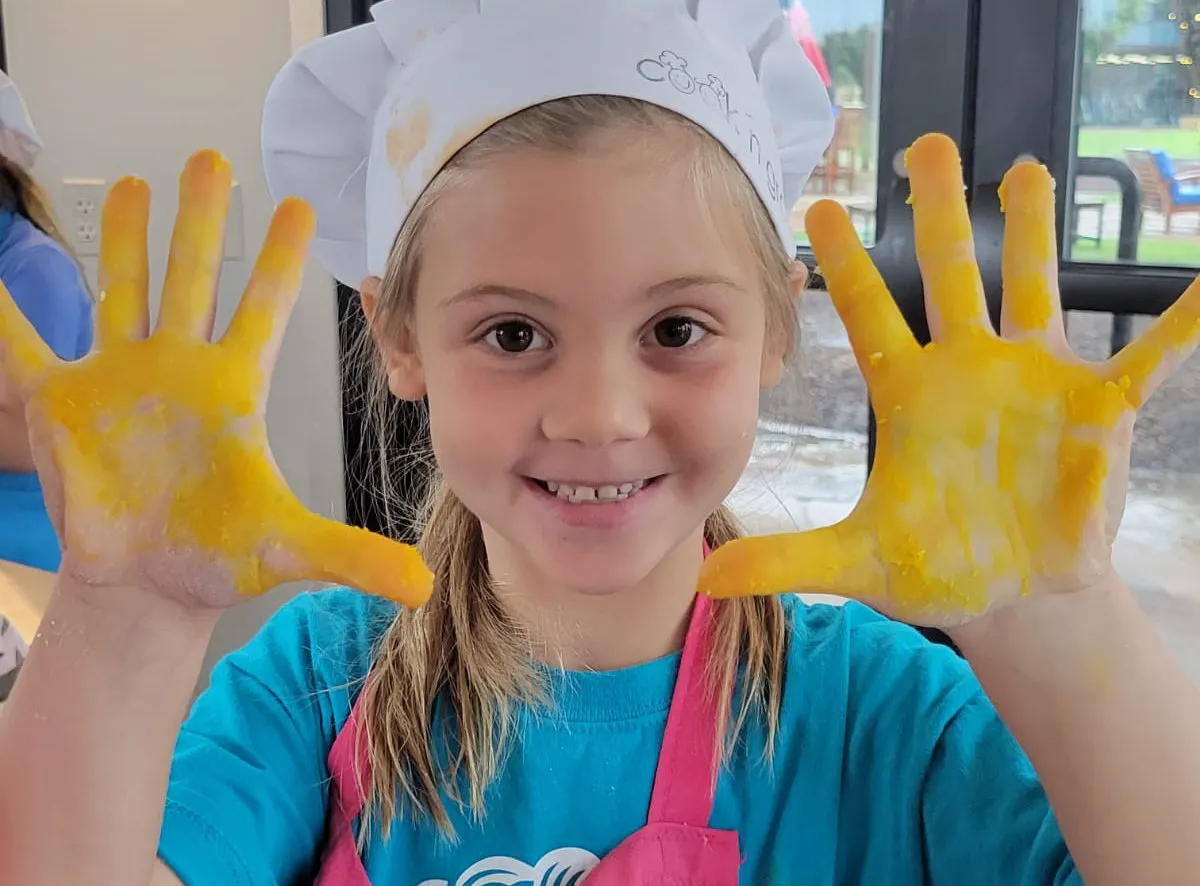
Cook N Grow runs hands-on cooking and baking classes for children out of a retail storefront in College Station, with additional locations that open only for the summer in other Texas cities. Its curriculum builds independence in the kitchen: technique, etiquette and table manners, measuring and other kitchen skills, taught in a class setting rather than a demonstration. Bookings run online, and the audience has been children and the parents who sign them up.
By Fall 2023 the business had drawn interest it was not built for. Companies had begun booking the space for team-building during campus recruiting season, and the owner saw an adult version of the concept, built around connection over a shared meal, as the natural next venture. The plan called for a distinct brand and its own website rather than an extension of the children's identity, since the existing brand could change hands. College Station gave the concept a large student population on its doorstep, a steady flow of visiting recruiters, and a fragmented cooking-class market with few established local providers.
Challenge
Cook N Grow teaches children to cook through hands-on classes at its College Station storefront, with additional locations that open for the summer. The owner wanted to extend the concept to adults under a separate name, with college students and corporate groups in mind, and asked TASK to work out who that new business should serve, how it should be priced, and how it should present itself before launch. The adult venture had to stand on its own: a name that did not read as a children's brand, its own website rather than a page on the existing one, and outreach aimed at audiences the business had never marketed to. The owner was open to every adult audience, wanted classes built around connection as much as instruction, and wanted a starting point she could act on before committing to a permanent location, a schedule, or a price list.
How the team worked
The engagement began with a kickoff conversation about the owner's vision for the adult concept: open to everyone except children, with college students as the likely core audience and corporate team-building events as a second priority. The owner wanted a fresh name rather than a fixed formula, a separate website for the new business, and a way to reach each new audience where it already gathers. From that brief the team split the work into two tracks, market research and rebrand, and set a weekly working meeting to keep both moving against the same client checkpoints.
On the research track the team studied the cooking-class industry as a whole, then ran a survey of Texas A&M students to test the assumption that students would be the core audience. Secondary research filled in the segments a survey could not reach: recruiters and professionals, couples, and retirees and seniors. Each segment became a one-page profile covering buying behavior, scheduling and class-length preferences, cuisine interests, and what the group looks for in a provider, which in turn gave the pricing work a reason for each tier rather than a single flat rate.
On the brand track the team generated candidate names, checked domain availability and similarity to existing businesses for each, and mocked up logo directions for the leading options across professional, casual, and romantic themes, mapping each to the audiences it would suit. The team then studied how established culinary team-building providers structure their sites, listed the elements a booking-led site needs, and prototyped a site with an AI website builder so the owner could react to something concrete instead of a description.
Work ran in sprints across the term, with research and competitor analysis first, customer profiles and brand concepts next, and drafting and review at the end. The final written deliverable and presentation closed with a five-step launch sequence: understand and choose the target market, develop the brand, design class experiences and pricing, develop the website, and begin marketing.
Workstreams
- Surveyed college students at Texas A&M on how often they cook, which cuisines they wanted to learn, and when, where, and in what group size they would attend a class.
- Profiled four target segments for the adult concept: college students, campus recruiters and professionals, couples, and retirees and seniors, each with buying behavior, scheduling preferences, and cuisine interests.
- Researched pricing among online and Texas cooking-class providers and proposed a tiered pricing approach with package ideas for each segment.
- Compiled candidate business names with domain availability and brand-similarity ratings, then developed logo concepts for the leading options across professional, casual, and romantic themes.
- Analyzed the websites of established culinary team-building providers, listed the elements the new site should include, and built a sample site with an AI website builder as a starting point.
- Reviewed the existing site's search optimization, set out a platform-by-platform social media plan, and outlined further outreach channels including email, campus events, partnerships, and repeat-booking incentives.
What the team found
- Students described a consistent class shape rather than a consistent cuisine: weekend evenings, a short session at a dedicated venue, and a small group rather than a large one.
- Interest in cuisines was spread widely across the student responses, with a handful of options recurring often enough to anchor a starting menu of classes.
- The segments differed more in what they will pay for than in whether they want the experience, which is what made a single flat class price a poor fit across all four.
- Recruiters and professionals looked for an established, polished provider and judged the booking on atmosphere and experience, while couples valued flexibility for two different skill levels in the same class.
- Retirees and seniors were the only segment available on weekdays and during the day, which made them the segment that could fill hours the other three would leave empty.
- Established culinary team-building sites converged on the same elements: imagery from past sessions, transparent packages, class descriptions, a booking calendar, and reviews placed where a first-time visitor would meet them.
What the client received
- Written final deliverable covering market research and rebrand recommendations
- Final client presentation deck
- College student survey findings on cuisine, timing, format, and group size
- Customer profiles for four target segments with pricing strategies
- Industry and market analysis of the in-person and online cooking-class market
- Candidate name list with domain availability and brand-similarity ratings
- Logo concept boards for seven candidate names, mapped to audiences and themes
- Competitor website analysis and a checklist of elements the new site should carry
- Sample website built with an AI website builder, plus a builder comparison
- SEO, social media, and alternative outreach recommendations
Outcome
The owner left the semester with a defined set of adult customer segments and what each expects from a class, a tiered pricing logic to test against them, a shortlist of names and logo directions with domains already checked, and a written view of what an adult cooking-class website needs to carry. She could see which audience the concept could open with, which scheduling and class formats each group prefers, where the brand could sit between professional and casual, and in what order to take the remaining decisions, from choosing a target market through brand, class design, website, and marketing.
Recommendations
- Choose one target segment to open with rather than serving all four at once, using the profiles to decide which audience the first classes, cuisines, and time slots are built around.
- Price by segment rather than by class, with tiers matched to what each group already spends on a comparable night out, and package options such as group discounts, date-night specials, and daytime sessions.
- Select a name from the shortlist with trademark and domain checks completed before any brand work is committed, since several candidates sit close to businesses already operating.
- Pick a logo direction by the audience it suits, treating the professional, casual, and romantic themes as a choice about who the brand speaks to first.
- Build the new site around booking: packages, class descriptions, a calendar, payment, and imagery from past sessions, using the prototype as a starting layout rather than a finished design.
- Run outreach per segment rather than in general, matching platform and message to each audience, and add repeat-booking incentives such as post-class email offers and a loyalty program.
Next steps
- The client was handed a five-step launch sequence running from choosing the target market through brand, class design and pricing, website, and marketing.
- The client was handed four customer profiles with a pricing tier and a set of class-design moves attached to each, ready to test against real bookings.
- The client was handed a name shortlist with domain availability and similarity ratings, logo boards for the leading options, and a note to complete a trademark search before committing.
- The client was handed a working sample website and a competitor-derived checklist of the elements the new site should carry, to build on or hand to a designer.
- The client was handed a platform-by-platform social media plan and a list of further outreach channels, including email, campus events, and partnerships.
The team
- Ramyani Roy, project lead
- Connor Yesh
- Ethan Niedzwiedz
- Julian Harrison
- Sahana Patel
- Syarief Shahab