Context
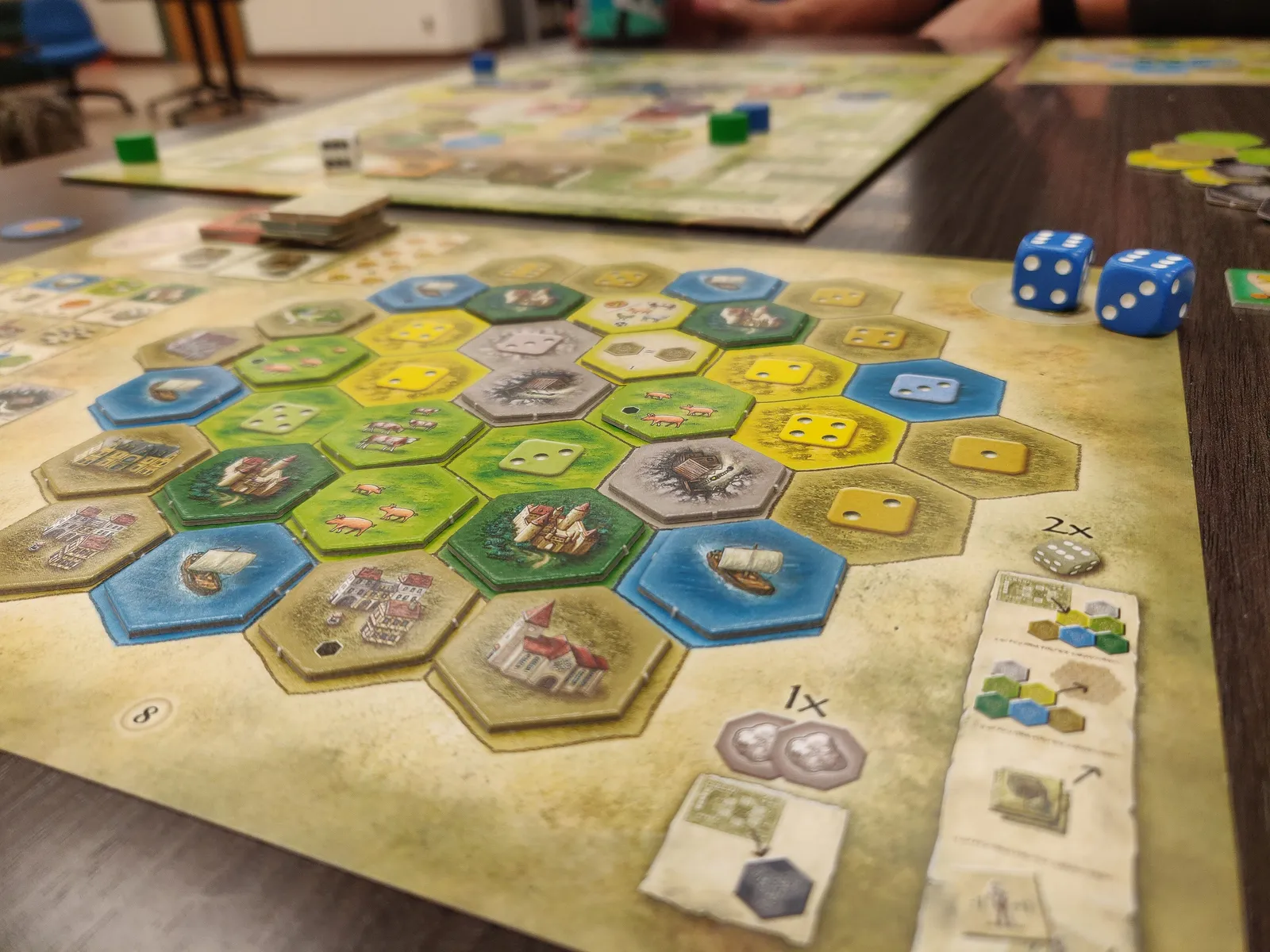
Clockwork Games is a tabletop gaming store and event space in Bryan/College Station, Texas. It sells trading card games, wargames, board games, and the hobby supplies that go with them, and it keeps an open floor where customers can play, try games before buying, and join tournaments and campaign nights. Part of its community lives online, on a chat server the store uses to post announcements, and part of it lives around the tables in the shop.
Going into the fall, the store had expanded its upstairs play area and was adding tables, terrain, and battlemats to it. It was also weighing a move into sports cards, a category with its own buyers, its own buying habits, and its own local sellers. Around all of this sat a university town whose student population turns over every year, which gives the store a steady supply of potential newcomers and a standing need to introduce itself again.
Challenge
Clockwork Games is a tabletop gaming retailer and community space in Bryan/College Station, specializing in wargames and card games and hosting play sessions and events on site. Heading into the fall, the owners wanted to know how to bring less experienced gamers and college students through the door, whether their advertising and shelf space were working as hard as they could, and what the store's financials said about where to focus next. The store was also fitting out an expanded upstairs play area and preparing to add sports cards to its shelves, so the questions were not abstract: the owners needed to know which categories deserved room, which advertising channels still reached anyone new, and how staffing lined up with the hours customers actually came in.
How the team worked
The team split the engagement into a financial track and a marketing and outreach track. The financial track started from the store's own income statements and payroll records, building an overall profit and loss picture before drilling into two questions the owners cared about: whether paint inventory earned its shelf space and whether staffing matched demand. Ratios were calculated for both of the most recent years so the store had a comparison rather than a single snapshot, and the year was then broken into months to find which ones ran best and worst and why.
The staffing question was answered by putting two things side by side: what payroll represented within total expenses, and when customers actually came through the door. That pairing turned a cost question into a scheduling one, and pointed the recommendation toward cross-training and shift shape rather than headcount. The same track took on the sports card question from the outside in, with market research on how that category sells, a map of the sellers already working the area, and a staged entry plan built to keep the first commitment small.
Advertising was treated as a measurement problem before a creative one. The team read the store's own reach and visit figures across consecutive months, looked for the flattening that signals a saturated audience, and only then assembled alternatives, each with its cost basis and the audience it reaches, so the owners could compare channels rather than swap one habit for another.
The marketing track approached brand awareness from the newcomer's point of view. The team audited Clockwork's Instagram, Discord, and website, then designed the pieces a first-time visitor would encounter: a welcome trifold, beginner game guides, and a loyalty program that rewards repeat visits. Recommendations were delivered as a written report and an in-person presentation, with editable templates and printing guidance so the store could adapt and reprint them season to season.
Workstreams
- Reviewed the store's profit and loss statements, calculated a set of accounting ratios, and walked through year-over-year and month-by-month performance to show where margin and net income were moving.
- Analyzed payroll against customer traffic patterns and recommended cross-training staff and scheduling to peak days.
- Compared paint product lines against the shelf space they occupied and suggested how to prioritize, bundle, and rotate inventory.
- Researched the sports card market, mapped local sellers, and laid out a staged entry plan ahead of Clockwork's planned move into that category.
- Evaluated the reach and cost of the store's existing Facebook advertising and proposed alternative channels, including Instagram, Google Maps, Reddit, local events, and student organizations.
- Built a marketing and outreach kit: an Instagram and Discord playbook, website fixes, two loyalty program designs, a customizable welcome trifold, new player guides for Magic: The Gathering and Dungeons & Dragons, and printing and distribution guidance.
What the team found
- The hobby paint lines differed sharply in how much they returned for the shelf space they held, and only one family of lines carried its footprint consistently across the period reviewed.
- Customer traffic clustered on weekend evenings and thinned early in the week, a rhythm that scheduling and cross-training could be matched to more closely than they were.
- The store's long-running advertising channel showed the shape of a saturated audience: steady effort, flat visits, and reach that had stopped climbing, which points to reaching regulars rather than newcomers.
- Sports card buyers behaved differently from trading card players, leaning toward collecting and long-term value rather than competitive play, and buying online far more often than in a shop.
- The local sports card sellers ranged from dedicated specialists to general resale, which leaves room for a store that pairs a physical play space with an online storefront.
- Comparing the two most recent years showed margin and net position moving in the store's favor, with cost control rather than sales volume doing most of the work.
What the client received
- Written final report covering financial and marketing recommendations
- Final presentation deck, delivered in person
- Profit and loss analysis with accounting ratios and a month-by-month performance review
- Wage and staffing analysis set against store traffic patterns
- Paint shelf-space analysis with pricing, bundling, and rotation suggestions
- Sports card market research, local seller map, and staged entry plan
- Advertising channel evaluation with costed alternatives
- Instagram and Discord playbook plus website structure suggestions
- Two loyalty program designs with the measures to judge them
- Editable welcome trifold, new player guides, and printing and distribution guidance
Outcome
Clockwork Games now has a clear read on its financial position, a set of ratios it can track over time, and a staffing approach tied to when customers actually visit. It has a researched view of the sports card opportunity and a way to test it without committing the shop to it, a rationale for spreading advertising across more channels, and a shelf-space rule it can apply to categories beyond paints. It also has ready-to-use templates for welcoming newcomers, so the store can grow its community without starting from scratch each season.
Recommendations
- Give shelf space to the products that earn it: keep the paint line that sells consistently, retire the slower alternatives, and use the freed space to test and rotate items the current customer base actually asks for.
- Cross-train staff so a smaller weekday crew can cover the floor, the counter, and the register, and weight scheduling toward the busiest evenings while keeping quieter days lean.
- Enter sports cards in stages: begin with a small trial inventory to gauge overlap with current customers, build out the online storefront for that audience, and use existing supplier relationships to secure stock and events others cannot match.
- Treat the long-running ad channel as a way to tell existing regulars about events, and run short trials on other channels to reach newcomers: a photo-first social platform, map listings, local forums, campus fairs, and student organizations.
- Track the accounting ratios each year and watch the payroll to sales relationship month by month, using the strongest and weakest months as reference points for what to repeat and what to avoid.
- Build the newcomer path deliberately: a steady posting rhythm, chat channels split by topic, a website that lists everything the store carries and says the play space is open, and a loyalty program that rewards repeat visits.
Next steps
- The client was handed editable templates for a welcome trifold and two beginner game guides, so staff can update them for new seasons, games, and events without redesigning anything.
- The client was handed a staged sports card entry plan that starts with a small trial purchase and moves on to marketing and retention only once customer interest is confirmed.
- The client was handed two loyalty program designs, one tiered and one points-based, together with the measures to judge whether the program is working once it runs.
- The client was handed a printing and distribution plan for the flyers, covering where to have them made and where to place them: in store, in online orders, and at campus fairs.
- The client was handed a shortlist of advertising channels to trial in one and two month sprints, with the cost basis and the audience each one reaches.
The team
- Raj Nallanthighal, project lead, Facebook ad spend, sports card market entry and payroll analysis
- Amanda Hare, Financial analysis
- Esther Chiu, Instagram, Discord and website revamp plus a loyalty program
- Satvi Sheth, Instagram, Discord and website revamp plus a loyalty program
- Shane Moe, Facebook ad spend, sports card market entry and payroll analysis