Context
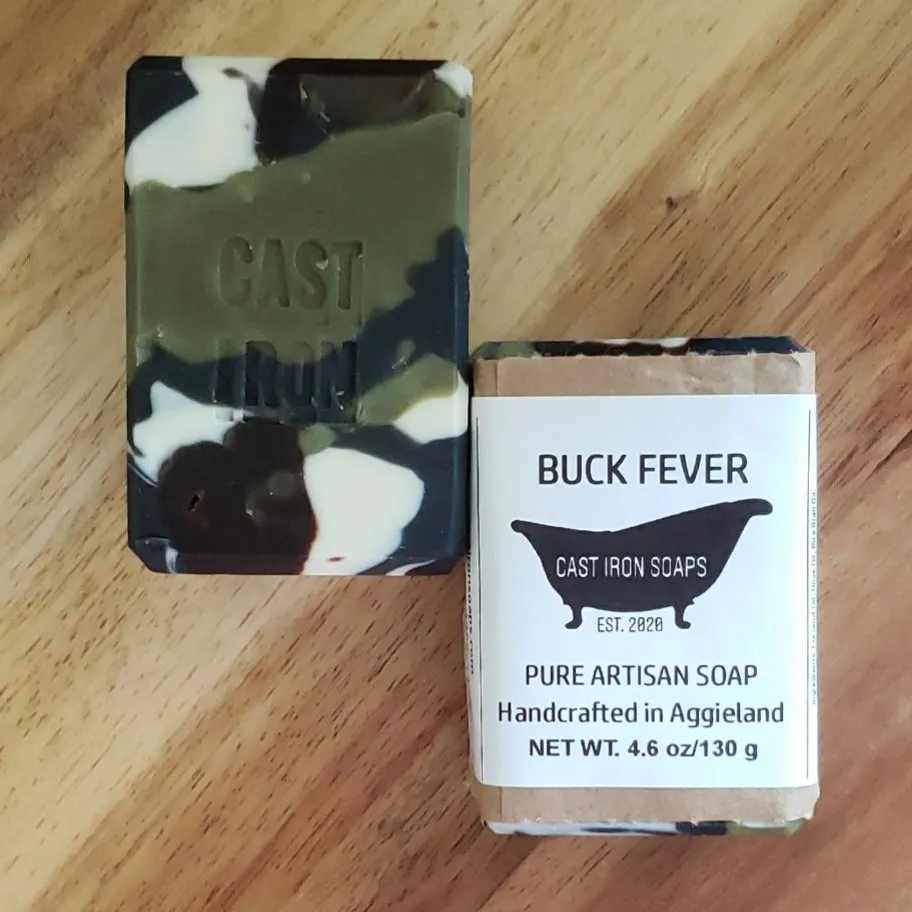
Cast Iron Soaps is a handmade soap maker working in small batches, using essential oils and simple ingredients, with varieties built around scents such as lavender, lemongrass, and eucalyptus. The business was started to make natural products from quality ingredients, and it is run by its owner. Most of what it sold moved in person, at farmers markets around its home area, where customers could handle the product and talk to the maker directly.
Alongside those in-person sales, the business kept an Etsy shop, an Instagram account with strong product photography, and a domain of its own. Buying was moving online across handmade goods generally, and retail buyers were beginning to be a realistic outlet for a maker at this size, but both routes carry requirements a market table does not: catalogs, listings, storefront setup, and scannable barcodes on the packaging.
Challenge
Cast Iron Soaps makes small-batch soaps from essential oils and had built its following at farmers markets and through an Etsy shop, with a mostly local customer base. The owner wanted to move bookkeeping into accounting software, open additional online storefronts, build a stronger Instagram presence, and add product barcodes so the soaps could be stocked by retail stores. Each of those steps carried its own question: which accounting plan suited an owner-operated maker, how an existing domain and existing Etsy listings could carry into a new store, what a handmade marketplace asked of applicants, and where barcodes registered under the business's own name could be bought without running into codes that some retailers will not accept. TASK was asked to research each of those steps and lay out how to take them.
How the team worked
The team started by learning how the business ran: soaps made in small batches from essential oils, sold mostly in person at farmers markets, with some sales through Etsy and an Instagram account already producing strong product photography. From conversations with the owner, four priorities emerged, accounting, social media, e-commerce, and barcodes, and the team organized both its research and its final document around those four.
Each priority was researched against the platform's own documentation and help material rather than secondhand summaries. For accounting, the team read through the plan tiers and matched the feature list against what an owner-operated soap business actually does: importing transactions, sorting them for tax, keeping receipts, invoicing, and reporting. For the storefronts, the team walked the sign-up and listing flows to see what each one asks for before a seller can go live.
The team then wrote the deliverable as a set of practical guides rather than a general strategy. Each section explained the option under consideration, laid out the setup steps in order, and pointed to the official help resources the owner could return to later, so the recommendations could be carried out without the team present. Instagram guidance was written the same way, with sample bio language the owner could adapt and the highlight and shopping setup broken into numbered steps.
For barcodes, where the risk was buying codes a retailer would later reject, the team explained what the codes are and why stores ask for them, then compared reputable sources on the terms that mattered to a small maker: whether codes are registered under the business's own name, whether they can be bought singly or only in packages, and how widely they are accepted.
Workstreams
- Compared QuickBooks plans and outlined how the business could use the software to track income, expenses, receipts, and sales tax.
- Reviewed the Instagram account and drafted bio language, a story highlights structure, and a setup path for Instagram Shopping tied to a product catalog.
- Evaluated Shopify as a storefront for the business's existing domain and wrote a step-by-step guide covering store setup, product migration from Etsy, testing, launch, sales channels, and promotion.
- Researched Amazon Handmade, including its application process, artisan profile, and listings, and showed how existing Etsy content could be reused there.
- Explained what UPC codes are, why retail stores require them, and compared reputable sources for purchasing codes registered under the business's own name.
What the team found
- The four goals the owner raised turned out to depend on one another: the same product catalog that powers a storefront is what makes Instagram shoppable, and accounting software can read from the storefront directly.
- The storefront options differed less in what they cost than in what they asked for, one building a store on a domain the business already owned, the other offering an existing marketplace audience behind an application and review.
- Because the Etsy shop already carried product images and descriptions, most of the listing work for both new storefronts was migration rather than authorship.
- The Instagram account's strength was already visual, and what it lacked was the connective work: a bio that says what makes the soaps distinct, highlights that hold announcements past a day, and tags that carry a viewer to a product.
- Barcode sources varied on the points that matter to a small maker: whether codes are registered under the business's own name, whether they can be bought one at a time, and how widely retailers accept them.
- One of the two storefronts researched required no barcodes at all, which separated the online expansion question from the retail shelf question.
What the client received
- Final written recommendations document covering accounting, social media, e-commerce, and UPC codes
- Presentation deck summarizing the business overview, the owner's goals, and the proposed solutions
- Accounting plan comparison with the bookkeeping tasks the software would take over
- Instagram bio, story highlights, and Instagram Shopping setup recommendations, with sample bio language
- Step-by-step Shopify guide covering setup, product migration from Etsy, testing, launch, sales channels, and promotion
- Step-by-step Amazon Handmade guide covering the application, artisan profile, and listings
- Comparison of UPC code sources, with links to the official help pages for each step
Outcome
Cast Iron Soaps now has a written plan for each of the four steps it wanted to take: a bookkeeping system to adopt and the tasks it would take over, an Instagram approach that points followers toward purchase, two online storefronts to open alongside Etsy with the setup order spelled out, and a clear route to the product barcodes that retail placement requires. The owner can judge which platform fits the business, knows what each application and setup involves before starting one, and can take the four steps on in whatever order suits the business.
Recommendations
- Adopt accounting software at its entry tier and use it to track income and expenses, capture receipts, issue invoices, and follow sales tax, upgrading only if the business outgrows it.
- Rewrite the Instagram bio to lead with what makes the soaps distinct, and use it to carry current announcements such as upcoming market appearances and limited runs.
- Organize stories into named highlights so events, new products, and process posts stay on the profile, and set up Instagram Shopping once a product catalog exists to feed it.
- Open a storefront on the domain the business already owns, moving product images and descriptions over from Etsy, testing an order end to end, and only then removing the store password.
- Apply to the handmade marketplace as an artisan, reusing the Etsy shop's story and product content for the artisan profile and listings, and allow for the review period before planning a launch.
- Buy barcodes from a source that registers them under the business's own name and is accepted across retail and online stores, choosing between package and single-code purchasing to match the range of products.
Next steps
- The client was handed a document organized as four sections, each one written to be worked through on its own so the goals could be taken up in whichever order the business was ready for.
- The client was handed ordered setup sequences for both storefronts, from signing up through organizing products, testing the store, opening it, adding sales channels, and promoting it.
- The client was handed links and codes pointing to the official help pages and setup guides for each platform, so the steps could be followed after the engagement ended.
- The client was handed a shortlist of barcode sources with the terms to weigh before buying, ahead of any approach to retail buyers.
The team
- Leo Thomas, project lead
- Anthony Szeto
- Ashna Patel
- Ethan Tan
- Zayd Hinedi