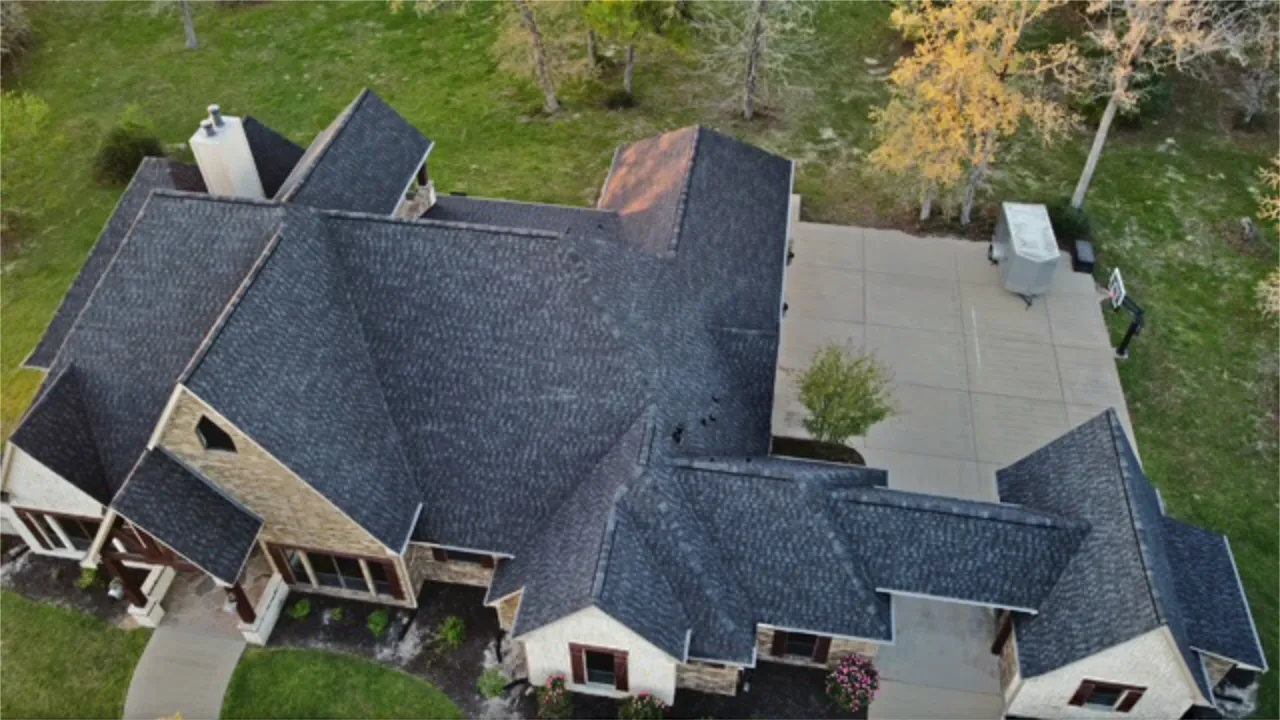
Context
Brazos Valley Roofing Experts is a roofing contractor based in College Station, Texas, working across the Brazos Valley on both residential and commercial roofs. Its customers are homeowners in the Bryan and College Station area together with property owners on the commercial side, and its work is sold locally rather than online. At the time of the engagement the business presented itself through a website organized by service, a Facebook page carrying its phone number, email, and website, and local search results it already appeared on the first page of.
The engagement fell in the spring of 2022, with construction and mixed-use development active around College Station and a local real estate market busy enough to support sizeable online communities of agents, investors, and renovators. That activity pointed toward commercial and repeat work the business wanted more of, and it also raised the question of staffing, since selling into that work meant adding sales people. The owner was at the same time working toward a search-engine trust badge for the website, so the digital fundamentals were moving rather than static.
Challenge
Brazos Valley Roofing Experts serves homeowners and commercial property owners across the Bryan and College Station area. The business already had an accessible website, a Facebook page, and the basics of search visibility in place, and it kept in touch with past clients through letters and annual gifts. The open questions were how to reach more of the right clients, particularly on the commercial side where the work is better aligned with the business, and how to bring qualified sales team members on board. An early round of ideas made the constraint clear: the obvious moves for a local contractor were already done, so anything useful had to go past the standard marketing checklist. As a local service business rather than an online one, it also needed marketing that worked at the level of a single county, not a national audience.
How the team worked
The team began by mapping the three areas the owner wanted help with: reaching new clients, hiring sales team members, and content and search marketing. A preliminary plan set out marketing, client acquisition, and hiring as the three workstreams, each with the channels in scope, the way progress could be measured, and how long setup would take. The same plan fixed the calendar: a second check-in in the final week of March and the deliverable presented in the final week of April.
Before recommending anything, the team looked at what the business already had, walking the website, the Facebook page, and the local search results. That review found organized pages, mobile compatibility, first-page local results, and a search program that was already sound for an offline business. Confirming those fundamentals let the team drop the standard advice and spend the semester on tactics a local contractor rarely reaches for.
Each remaining idea was tested against how a small team could actually run it: how often it needed attention, what it cost, and whether it fed residential work, commercial work, or both. That filter favored content that builds trust and backlinks, proactive networking inside local real estate groups, a free customer relationship management platform to keep client records in one place, and direct pipelines into university talent.
The final deliverable was written in two halves, recommendations and implementation, so each idea came with the concrete steps, example content, templates, and links needed to act on it. The hiring and commercial sections were carried into an appendix of channels and starting points. TASK presented a summary deck to the client and followed with the full written guide.
Workstreams
- Reviewed the website, Facebook page, and search presence to establish which marketing fundamentals were already working, so the recommendations could focus on what was missing.
- Recommended a blog or updates section and a periodic client newsletter, with topic ideas, posting cadence, templates, example blogs from other industries, and the backlink and local-platform tactics that connect content to search visibility.
- Compared customer relationship management platforms, recommended a free option with setup and training resources, and paired it with a simple post-job feedback survey the owner could run and chart without extra tools.
- Built a Facebook networking playbook covering weekly posting, photography and hashtag guidance, profile housekeeping, and a method for finding and engaging local real estate and investor groups to reach both residential and commercial leads.
- Identified business-to-business channels for commercial client acquisition, including a small business development organization and an active local development project.
- Outlined a hiring approach that combined the Texas A&M career center and department advisor contacts with targeted professional network outreach for sales roles.
What the team found
- Regularly updated websites are common in industries such as dental care, groceries, and entertainment, but rare among roofing companies, leaving an opening for a contractor willing to publish.
- Because the business sells to a local area rather than online, search visibility follows different rules, and steady upkeep plus referral links matters more than a large search program.
- The website already met the fundamentals search engines reward: pages organized by content, mobile compatibility, and a first-page position in local results.
- A blog and a newsletter do different jobs: one runs on an open schedule and draws new readers, the other runs on a cycle, needs varied content, and keeps past clients engaged.
- Local real estate and investor groups online gather the agents, renovators, and buyers who commission roofing work, so one channel can serve both residential and commercial outreach.
- University career channels and professional network search reach different candidates: one collects applicants passively, the other filters for a specific role and moves quickly.
What the client received
- Written final deliverable pairing each recommendation with its own implementation guide
- Summary presentation deck delivered to the client
- Preliminary plan and roadmap setting the workstreams, measures, and timeline
- Blog and updates plan with topic ideas, cadence, and example blogs from other industries
- Newsletter plan with schedule, topic suggestions, and template sources
- Customer relationship management setup and training resource guide
- Facebook networking playbook covering posting, imagery, hashtags, and group outreach
- Search visibility notes focused on backlinks and local publishing platforms
- Post-job feedback survey approach with a guide to building and reading the form
- Appendix of hiring and commercial channels with links and starting points
Outcome
Brazos Valley Roofing Experts came away with a prioritized set of marketing, lead generation, and hiring recommendations, each paired with a step-by-step implementation guide, templates, and links. The owner can see which channels are worth weekly attention, which need only periodic upkeep, and which reach commercial rather than residential work. The plan built on what the business already had in place rather than replacing it, and it is written so the owner can start with a single recommendation and add others later. TASK planned a follow-up the next semester to check on implementation.
Recommendations
- Add an updates or blog tab to the website and post every month or two, leaning on the slower season, using it as both a trust builder and a portfolio for commercial prospects.
- Start a periodic newsletter for past and current clients on a set schedule, beginning twice a year, built from a reusable template and topics such as housing market notes and seasonal greetings.
- Adopt a free customer relationship management platform to hold contact records, call and meeting notes, lead status, and task reminders in one place, using the vendor's own free training courses.
- Work Facebook more actively: post weekly with high quality roof and drone photography, broaden the hashtags, use the company logo as the profile image, and post services into local real estate groups rather than waiting for enquiries.
- Pursue commercial work through business-to-business channels, including a regional small business development organization and the development projects currently under construction nearby.
- Recruit through the university career center and department advisors for a steady applicant pool, and use professional network search when a specific sales role needs filling quickly.
Next steps
- The client was handed an implementation section for every recommendation, with the concrete steps, example content, templates, and links needed to start any one of them alone.
- The client was handed a Facebook networking summary condensing the posting cadence, photography, hashtags, and group outreach method into a single checklist.
- The client was handed a set of named channels for hiring and for commercial outreach, with the platforms and starting points to approach each.
- The client was handed an appendix collecting every resource cited in the guide, and TASK arranged to follow up the next semester on how implementation was going.
The team
- Caitlin Do, project lead
- Evelyn Fung
- Leo Thomas
- Madison Ramsey
- Samira Islam-Mina
- Syarief Shahab