Context
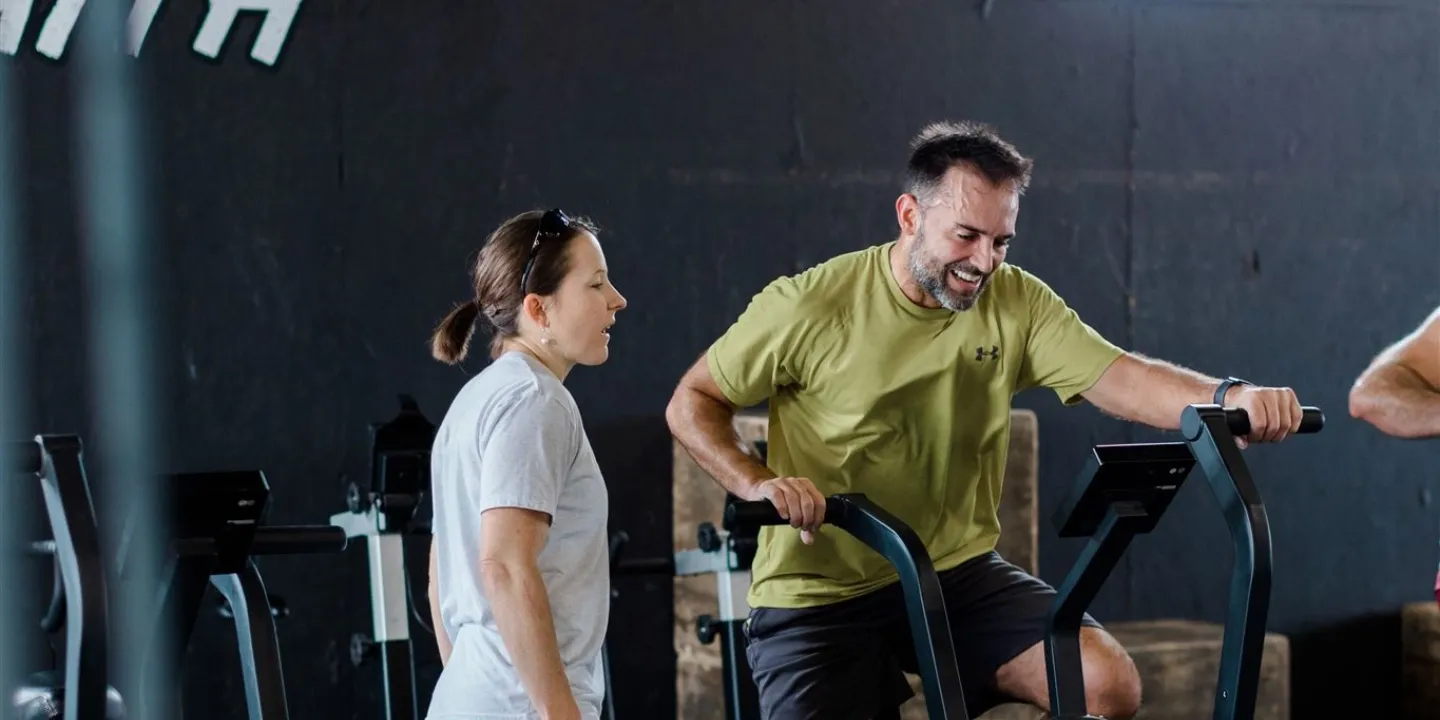
Boomfit is a CrossFit gym and personal training business serving the Bryan and College Station area of Texas. Alongside group CrossFit classes it sells one-on-one personal training, a six-week challenge program that runs for part of the year, massage, and a retail counter carrying nutritional supplements, shirts, and workout gear. Its membership is not limited to the university crowd the town is known for: the gym caters to a wide mix of people at different points in their training, and it runs a podcast series built around members who have made significant changes to their health.
The engagement ran across the first pandemic year and into the one after it, a period in which gyms everywhere were asking what membership demand would look like on the other side and prospective members were weighing whether to walk back through the door. Boomfit's own presence had grown in layers over the years, leaving two live websites with two different logos and a pricing page that opened only after a visitor submitted their details, at a moment when other gyms nearby were publishing their rates plainly.
Challenge
Boomfit runs a CrossFit gym and personal training business in the Bryan and College Station area of Texas whose revenue comes from several places at once: group classes, one-on-one training, a six-week challenge program, massage, and a small retail counter. Two years of operating records had never been pulled into a single view, so the relative weight of each service, and the months in which each did its best work, had never been set side by side. The pandemic year raised a further question about what gym demand would look like going forward. At the same time the gym's online presence had grown into two separate sites carrying two different logos, and pricing was reachable only after a visitor submitted their contact details. The owner wanted to know which services carried the business, how each behaved across the year, and how to present pricing and brand to people considering joining.
How the team worked
The team started with the numbers. Working from the gym's raw revenue and expense records, they built consolidated income statements for both years, keeping a running list of transactions they could not categorize and taking it back to the owner rather than guessing. With the statements settled, they charted revenue by stream for each year so the owner could see the distribution rather than a column of figures, and set the two years side by side to see what had changed and what had held.
The next move was to break the year apart. Rather than treat each service as a single annual total, the team traced when each one actually earned, month by month, which turned a question about which services to keep into a question about when to offer them. That reading is what produced the seasonal recommendations for the six-week challenge and for massage, and it separated the steady streams, group classes and personal training, from the ones that come and go with the calendar.
From there the analysis moved outward. The team built a five-year growth outlook framed against health and wellness industry trends and against the pandemic's effect on gym demand, taking an optimistic view on the assumption that conditions would settle. They then looked at where else a gym of this kind earns money, and shaped the options around assets Boomfit already had: a podcast series, a retail counter, and an audience that cares about diet as much as training.
Last, the team looked at the business the way a prospective member would meet it: searching online, landing on whichever site came up first, and trying to find out what a membership costs. They compared the pricing experience with how other local gyms present theirs and with findings from a concurrent TASK engagement with local gym-goers, then presented the whole package to the owner as a financial statement and recommendations deck with a short written recommendation alongside it.
Workstreams
- Consolidated two years of revenue and expense records into year-by-year income statements, working through unclear transactions with the owner to categorize them.
- Charted revenue by stream for both years and compared how group classes, personal training, the challenge program, massage, and retail each contributed.
- Traced the seasonality of individual services, including when the challenge program and massage performed best, to suggest when each should be offered.
- Built a five-year growth outlook that weighed health and wellness industry trends against the pandemic's effect on gym demand.
- Identified additional revenue options in podcast advertising, nutrition consulting, and an online store attached to the gym's website.
- Reviewed both websites and the pricing experience for prospective members, then recommended a single site with a published pricing structure.
What the team found
- Group CrossFit classes and personal training were the two consistent top revenue streams in both years, and their share of the whole held roughly its shape through the pandemic year.
- The six-week challenge earned most of what it earned in a short run of months rather than steadily across the year, which suggested it works best as a seasonal offering.
- The earlier of the two years showed a wider spread across services, with massage and retail both carrying more of the business than they did later.
- Massage did its best work in late spring and summer, while retail returned steadily across about half the months of the year.
- Personal training rose sharply at the start of the calendar year and eased off by mid-spring, a pattern consistent with new year resolutions that fade.
- Nearby gyms generally publish their rates in the open, whereas a prospective Boomfit member reached pricing only after submitting contact details.
What the client received
- Consolidated income statements for both years, built from the gym's own revenue and expense records
- A categorized expense review, with unclear transactions resolved alongside the owner
- Revenue distribution charts by stream for each year, with the two years compared
- A month-by-month seasonality read showing when each service earns
- A five-year growth outlook framed against industry trends and pandemic demand
- An additional revenue brief covering podcast advertising, nutrition consulting, and an online store
- Financial statement and recommendations presentation delivered to the owner
- A written recommendation on consolidating the gym's online presence under one site
Outcome
Boomfit now has consolidated income statements for two years, a clear read on which services carry the business and when each performs best, and a short list of new revenue options to weigh. The owner can see the seasonal services for what they are and schedule them accordingly, can compare the gym's pricing approach against how other local gyms present theirs, and has three decisions set out to act on: financial adjustments to the services that run seasonally, a transparent pricing structure, and one website carrying one brand.
Recommendations
- Offer the seasonal services when they perform: run the six-week challenge in the months it has historically earned in, rather than keeping it open across the whole year.
- Concentrate massage in the late spring and summer stretch where it has done best, and staff it with a mix that suits the range of athletes the gym actually serves.
- Keep retail available year-round if the margins hold, since it returns steadily enough across the year to earn its place at the counter.
- Open additional revenue lines that fit what the gym already does: sell advertising space in the podcast series, add nutrition and diet consulting through a part-time nutritionist, and attach an online store to the website.
- Publish a transparent pricing structure that shows what each package costs and what it includes, so a prospective member can weigh the decision without first giving up their contact details.
- Consolidate the online presence onto one site with one logo and one mission statement, keeping major tabs for each side of the business under a single umbrella.
Next steps
- The client was handed consolidated income statements for both years, built from the gym's own records and categorized with the owner, ready to serve as the base for the years that follow.
- The client was handed revenue distribution charts and a seasonality read by service, so the calendar for the challenge program and massage can be set from the record rather than from memory.
- The client was handed a five-year growth outlook framed against industry trends and the pandemic, to sit behind any decision about expanding services or staffing.
- The client was handed a written recommendation to move both sites under one umbrella site with major tabs for each part of the business, and a shortlist of additional revenue options to weigh.
The team
- Alex Simonson
- Ali Aleid
- Cyrus Buhariwalla
- Felix Read
- Isaac Low
- Justis Morales
- Sebastian Monroe
- Sunny