Context
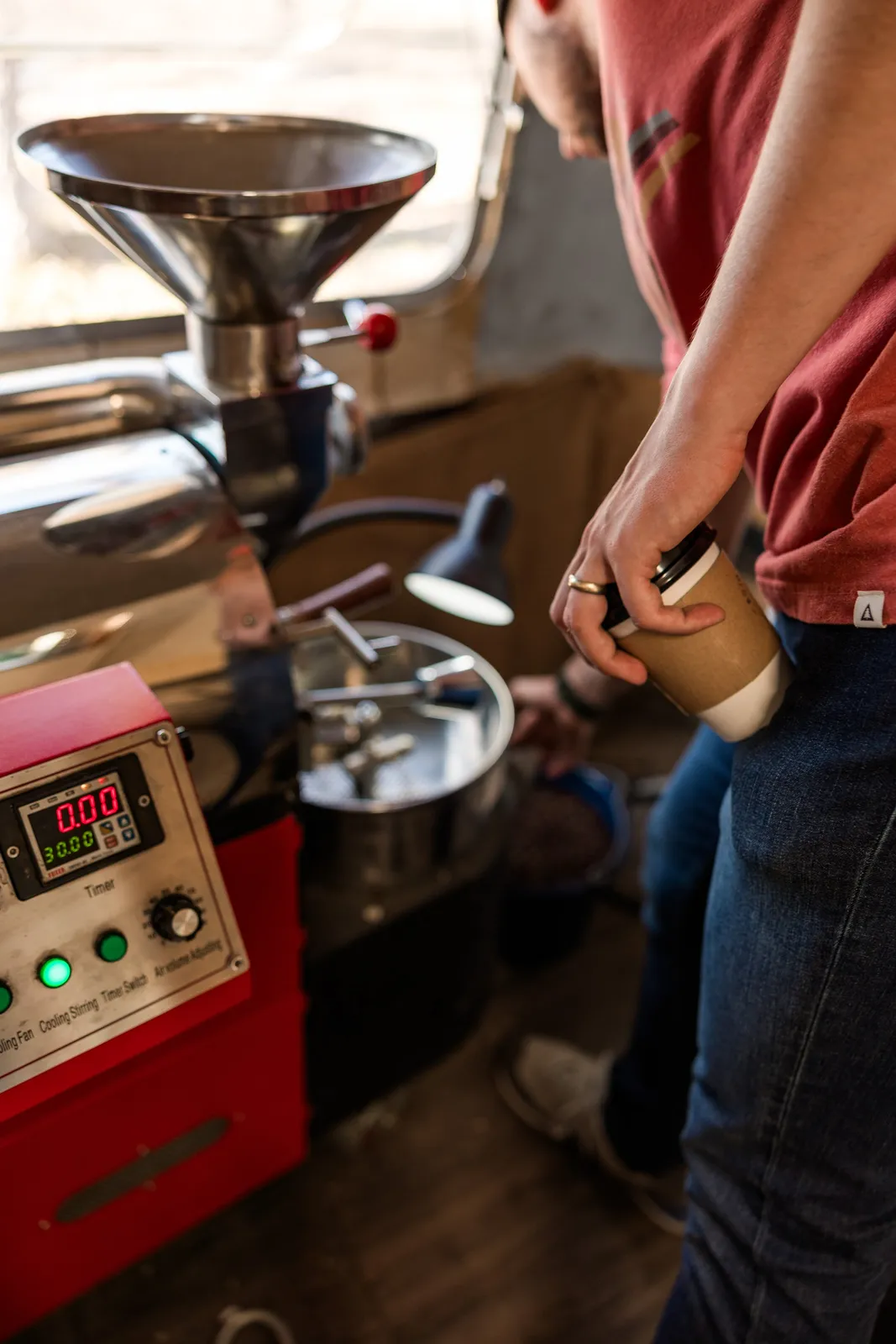
BoJo Coffee Co. is a specialty coffee roaster and cafe in Bryan-College Station, Texas. The owners began roasting for a local church several years before opening a storefront, building the business through thousands of pounds of roasted beans and coffee service at weddings and community events, and opened the cafe and roastery in the area shortly before the engagement. The business sells brewed drinks and pastries in the cafe, house blends and single origin whole beans to take home, and coffee service for events through a branded mobile cart.
The cafe sits off the main walking routes near the university, so it serves people who choose to drive to it: students looking for somewhere to work, young professionals who want an alternative to the chains, longtime Bryan residents, and organizers booking coffee for corporate and community events. Around it, the local specialty coffee market was already well served by established independents, while broader consumer interest in local roasting, bean subscriptions, and ethically sourced coffee was rising.
Challenge
BoJo Coffee Co. had grown from roasting for a local church and catering weddings and events into a cafe and roastery in Bryan-College Station. With a location away from campus foot traffic, the business could not compete on convenience, so the owners wanted to know what would make people choose to drive to it. They also wanted a read on how their pricing sat against the local specialty market, whether whole bean sales, wholesale accounts, and a mobile coffee cart could be sequenced into a structured growth plan rather than pursued all at once, and how to hear from customers early enough to act on what they said. The engagement had to answer all three inside a single semester and leave tools the owners could run without help.
How the team worked
The team opened with the local market. It set criteria for which specialty coffee businesses in Bryan-College Station counted as true comparables, then collected pricing across standard drinks, specialty drinks, whole beans, pastries, and merchandise, and built the whole set into a spreadsheet so category averages and gaps could be read side by side. A price index placed BoJo against the market, and a differentiation scoring model rated each comparable on product variety, seasonal offerings, brand identity, coffee expertise, and customer experience. Plotting price against differentiation showed the positioning clusters and told the team which categories carried room to move and which were already competitively aligned.
From there the team asked what actually makes someone drive to an off-campus cafe. It drew on published research about cafe atmosphere, ambient sound and focus, third place theory, and how college students choose study spaces, and organized what it found into a four tier framework separating entry requirements from differentiators, from the factors that specifically overcome distance, from the ones that build loyalty. Those tiers were then written into customer profiles covering students with cars, young professionals, longtime Bryan residents, and event buyers, each with its revenue streams, demand drivers, and a short list of moves to win it.
The profiles fed the growth work. Wholesale was structured as target categories in priority order, a seven stage pipeline from discovery through retention, and the assets required before any outreach began, with the existing punch card reworked into a quiet referral prompt. Alongside it the team drafted a student organization profit share approach, an online visibility plan for the local search and review platforms, a retail entry path covering packaging, labeling, and how to approach grocery buyers, and a go-to-market outline treating each cart activation as both a sale and a lead source. A three phase master timeline set the order of all of it.
The last workstream gave the owners a way to keep listening after the engagement ended. The team built three qualitative surveys, one for table tents, one tied to receipts with an incentive, and one for the roastery side, each sorting respondents into new, returning, and regular. It researched QR sizing by scanning distance, contrast, quiet zones, and finish, mapped placement against the stages of a customer visit, and set out incentive options. A linked Google Sheets framework carried a coding scheme, sentiment scoring, managerial notes, worked examples, and prebuilt pivot tables for reading trends.
Workstreams
- Benchmarked BoJo's pricing across drink, bean, pastry, and merchandise categories against local specialty coffee shops and built a price index and price-versus-differentiation matrix.
- Mapped priority customer segments and the demand drivers that justify a trip to an off-campus cafe, then translated them into an in-store action plan.
- Designed a wholesale client acquisition strategy with target categories, a staged pipeline, supporting sales assets, and a referral prompt built into the existing punch card.
- Developed a phased master timeline covering in-store revenue, retail bean packaging and grocery entry, and roastery and community expansion.
- Outlined a go-to-market approach for the coffee cart as both a revenue channel and a lead source for events and wholesale.
- Built a three-survey customer feedback system with QR placement guidance, incentive options, and a coding and pivot-table framework for spotting trends.
What the team found
- Pricing across the local specialty market was tightly clustered, with the widest spread, and the clearest room to move, sitting in specialty drinks rather than standard coffee or whole beans.
- BoJo's prices sat a little under the local average, a value position that leaves room to bring pricing closer to the premium experience the cafe already delivers.
- The strongest comparable businesses each led with one clear value driver, whether menu breadth, coffee expertise, or seasonal novelty, rather than competing evenly across every category.
- Published research on cafe choice showed that environment weighs heaviest for customers who sit and stay, while the drink itself matters more for those ordering to go.
- In a college market, distance becomes acceptable when the space solves a real problem, so seating, power access, parking, and hours carry as much weight as the coffee.
- Peer recommendation came through as the strongest discovery channel in this market, which makes the in-cafe experience the business's most important marketing asset.
What the client received
- Competitive pricing analysis across drink, bean, pastry, and merchandise categories
- Price index and price versus differentiation positioning matrix
- Tiered pricing and bundling recommendations with supporting value signals
- Customer segment profiles, demand driver framework, and in-store action plan
- Wholesale and B2B acquisition strategy with staged pipeline and required sales assets
- Student organization profit share and partnership outreach approach
- Online visibility and local search action plan
- Retail entry path for packaged beans, covering packaging, labeling, and buyer outreach
- Phased master timeline and growth milestones
- Customer feedback system: three live surveys, QR guidance, and trend analysis templates
Outcome
BoJo Coffee Co. now has a clear read on where its pricing sits in the local market and which categories carry room to move, a prioritized picture of which customers make the trip and what would keep them coming, and a phased roadmap that sequences in-store improvements before retail packaging, wholesale accounts, and roastery activation. The owners can also see how the cafe, the cart, and wholesale feed one another rather than running as separate efforts, and they hold a working feedback loop, with live survey forms and analysis templates in their own hands, that tells them what to fix next.
Recommendations
- Move specialty drink pricing gradually toward the local market average while holding steady in the categories already aligned with comparable businesses, so margin improves without broad price sensitivity risk.
- Support any pricing move with stronger perceived value: a coffee and pastry bundle, consistent drink presentation, and visible storytelling about the relationships behind the beans.
- Treat wholesale as a growth engine rather than an afterthought, opening with warm referrals from existing regulars and following every catered event with a sample box and a one page offer.
- Build the in-cafe experience as core infrastructure: zone the floor for focused work and for socializing, confirm power access within reach of every seat, and hold a consistent sound level.
- Claim and complete the business listings on the major local search and review platforms, add strong photography, and build review volume through a direct ask at the register.
- Sequence growth in phases, settling in-store revenue and loyalty first, then retail ready packaging and bean expansion, then roastery activation, community events, and paid promotion.
Next steps
- The client was handed a phased master timeline that puts in-store optimization first, bean and retail expansion second, and roastery activation and community expansion last, with the work for each phase set out in order.
- The client was handed a wholesale playbook: target categories in priority order, a staged pipeline, the sales assets to produce before any outreach begins, and a rollout starting with warm referrals.
- The client was handed three live customer surveys with editing access transferred to the business, plus QR sizing and placement guidance and a menu of incentive options to choose from.
- The client was handed a linked spreadsheet carrying a coding scheme, sentiment scoring, managerial notes, worked examples, and prebuilt pivot tables for reading trends without further help.
- The client was handed outreach approaches for student organization profit share events and for grocery buyers, each with the sequence and materials needed to start.
The team
- Diego Torres, project lead
- Jennifer Atkinson, Pricing analysis and product differentiation
- Sanah Alex, Revenue stream expansion and go to market strategy
- Taj Singh, Competitor landscape and market opportunity recommendations
- Shane Moe, executive