Context
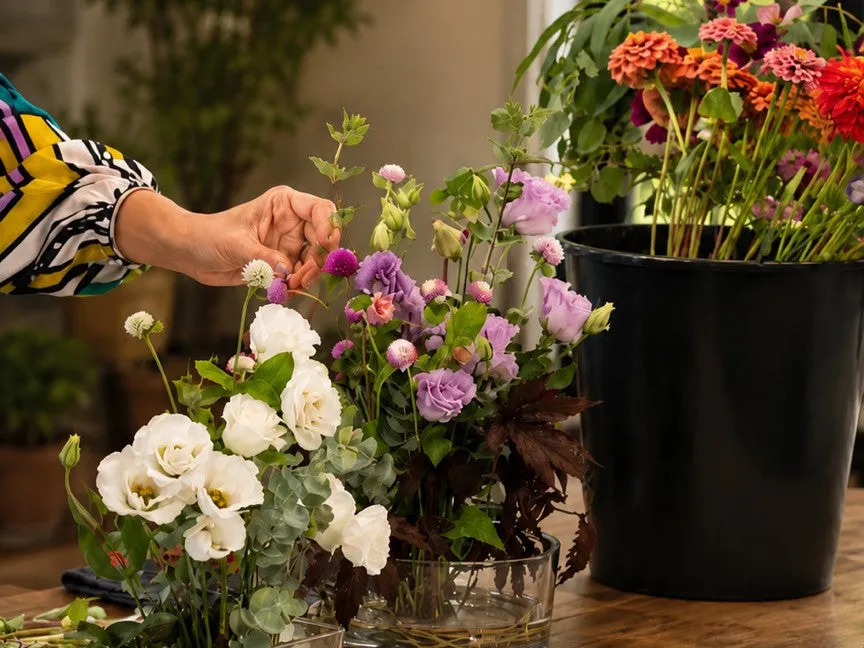
Bella Vista Farm was established in 2022 in Brenham, Texas, in the rural country between Houston and the Bryan and College Station area. It grows cut flowers and produces local honey alongside handcrafted goods such as pressed flower jewelry and botanical art. Its products reach customers two ways: at farmers markets and community festivals around the region, and through a self-serve stand at the farm itself, where visitors choose what they want and pay on their own. The farm sells on an authentic, local experience, with flowers grown without pesticides and sold close to where they were cut.
By late 2024 the farm was looking at a new phase of growth. The stand at the farm sits on a quiet road, and the owners were considering whether a second stand somewhere busier would widen the customer base. The nearby college towns offered a different kind of buyer at the same time: florists and event designers who need flowers year round, and a student population with its own calendar of occasions. The farm wanted a presence that carried across both, online and in person.
Challenge
Bella Vista Farm grows cut flowers and produces local honey and handcrafted goods in Brenham, Texas, selling through farmers markets, community festivals, and a self-serve stand on the farm. The business wanted to reach more customers and asked three questions: whether a second farm stand made sense, how to sell to local florists and event professionals, and how to build a more consistent presence online and in the community. A second stand carried real constraints: more inventory to keep two locations stocked, travel between them, and the chance that buyers in a new town would behave differently than the ones the farm already knew. The farm also wanted to know which grant and funding programs an agricultural business of its size could reach, and how to price flowers for buyers accustomed to wholesale supply.
How the team worked
The team organized the Fall 2024 term around four workstreams tracked on a shared master timeline: second stand logistics, market research, branding and social media, and event marketing. Each week assigned specific research to each stream so the four moved in parallel, with a catch-up week built in before the group turned to assembling the final deliverable. The work closed with an in-person final meeting where the written report and the deck were walked through together.
Work on the second stand started with the farm's own sales records, which showed how much of the year's business the existing stand actually carried, then moved through a SWOT analysis, an inventory of start-up and ongoing costs, and a review of towns and highway corridors where a new stand would meet a receptive audience and steadier passing traffic. Grant research ran alongside it, so that any expansion could be matched to state and federal programs open to a small agricultural business.
Market research combined desk research with direct outreach. The team screened every florist and floral designer in the Brenham, Bryan, and College Station area by their websites, keeping those whose custom arrangement and designer's choice offerings suggested a use for local stems, then interviewed the shops that responded about sourcing, pricing, event work, and what they would expect from a local supplier. Buyer preferences were surveyed to describe customer segments, and per-stem prices were gathered from online wholesalers and local growers to frame a pricing recommendation.
Branding and event marketing were delivered as working materials rather than advice alone. The team studied the social media habits of the farm's target audiences, reviewed comparable florist accounts for what made a feed cohesive, and produced a brand guide, mockups, a newsletter, and signage in editable files. For events, it costed materials for each workshop concept, compared venues from the farm itself to city-run rooms and campus spaces, and drafted flyers and a sign-up form flow the farm could reuse for any class it chooses to run.
Workstreams
- Assessed the feasibility of a second farm stand by reviewing the current stand's performance, listing start-up and ongoing costs, weighing strengths and risks, and identifying candidate towns and highway corridors.
- Compiled state and federal grant and loan programs suited to a small agricultural business, with notes on eligibility and permitted uses.
- Built a list of florists and event designers across Brenham, Bryan, and College Station, interviewed those open to local sourcing, and outlined next steps for supplier conversations.
- Researched customer segments and buyer habits, compared wholesale and local per-stem prices, and set out a pricing approach grounded in the farm's freshness and quality.
- Created a brand guide, content pillars, Instagram mockups, an email newsletter template, and farmers market signage, along with website recommendations.
- Designed an event marketing program with workshop concepts, venue options, materials lists, promotional flyers, and campus and coffee-shop promotions.
What the team found
- The sales review showed that farmers markets and festivals, rather than the stand at the farm, carried most of the year's business, so a second stand would depend on drawing considerably more passing traffic.
- Location mattered more than proximity: a stand on a busy highway corridor in a town the farm does not already serve promised more new customers than a site close to the existing stand, where the audience largely overlaps.
- The florist interviews showed a consistent pattern: shops lean on wholesalers for the bulk of their supply but stay open to local growers for freshness, fragrance, and varieties wholesalers do not carry.
- The price comparison put local growers above wholesale, a gap explained by the shorter time from cut to customer rather than by any difference in the flowers themselves.
- Buyer research showed demand concentrating on a few familiar flower types and clustering around a predictable calendar of occasions spread across the year.
- Comparing florist accounts showed that the feeds reading as most professional shared deliberate color transitions and a mix of formats, while repeated similar shots made an otherwise attractive feed feel cluttered.
What the client received
- Written final deliverable covering second stand logistics, grants and funding, market research, pricing, branding, and event marketing
- Final presentation deck walking the client through all four workstreams
- Second stand feasibility assessment with cost inventory, SWOT, and target locations
- State and federal grant and funding program summary
- Florist and event designer outreach list with interview findings and next steps
- Customer segment, buyer habit, and pricing analysis
- Brand guide, social media guide, Instagram mockups, email newsletter template, and farmers market signage in editable Canva files
- Workshop plans with venue comparison, materials lists, promotional flyers, and campus promotion concepts
Outcome
Bella Vista Farm left the engagement able to weigh a second stand on evidence rather than instinct, with the costs, risks, and candidate locations laid out and a case for strengthening the home stand first. It has a shortlist of florists and event designers open to buying local, a pricing rationale built on freshness and quality, a brand guide with ready-to-use social, newsletter, and signage templates, and a set of workshops and promotions it can run to bring new customers to the farm and the market.
Recommendations
- Direct resources toward strengthening the stand at the farm and its visibility first, and revisit a second location once the current stand is drawing steadier traffic.
- If expansion is revisited, favor a highway corridor in a town that opens a new population rather than a site close to the existing stand, and weigh whether a self-serve model still works at that distance.
- Apply to the state and federal agricultural funding programs identified, several of which pair funding with training and access to industry professionals.
- Approach the florists and event designers who said they were open to local flowers with specifics: which varieties are available, in what quantities, on what delivery schedule, and at what price.
- Price on freshness, quality, and pesticide-free growing rather than matching wholesale, treat pricing as negotiable with each buyer, and raise prices around peak occasions gradually with the added value made explicit.
- Put the brand guide to work with high-quality farm photography, post against the three content pillars, and concentrate on the platforms the farm's target audiences actually use.
Next steps
- The client was handed a second stand roadmap with a start-up and ongoing cost inventory, a SWOT, and candidate towns and highway corridors to work from if it revisits expansion.
- The client was handed a contact list of florists and event designers open to local sourcing, together with the questions to raise in a first supplier conversation.
- The client was handed a brand guide, Instagram mockups, an email newsletter template, and farmers market signage as editable files it can change at its own discretion.
- The client was handed workshop plans with materials lists, a venue comparison, promotional flyers, and a sign-up form flow to size each class before buying supplies.
The team
- Gopika Nair, project lead, Market Research
- Adith Veetil, Second Stand Logistics
- Amaya Vyas, Target demographic research, brand guide and social media
- Arianna Baag
- Jennifer Han, Farm stand signage and one day class programming
- Sanketh Marampally, Market Outreach
“The students provided invaluable insights into customer segmentation, branding, and financial strategies, helping to shape our business growth plan. Their fresh, professional perspectives have been a tremendous asset.”