Context
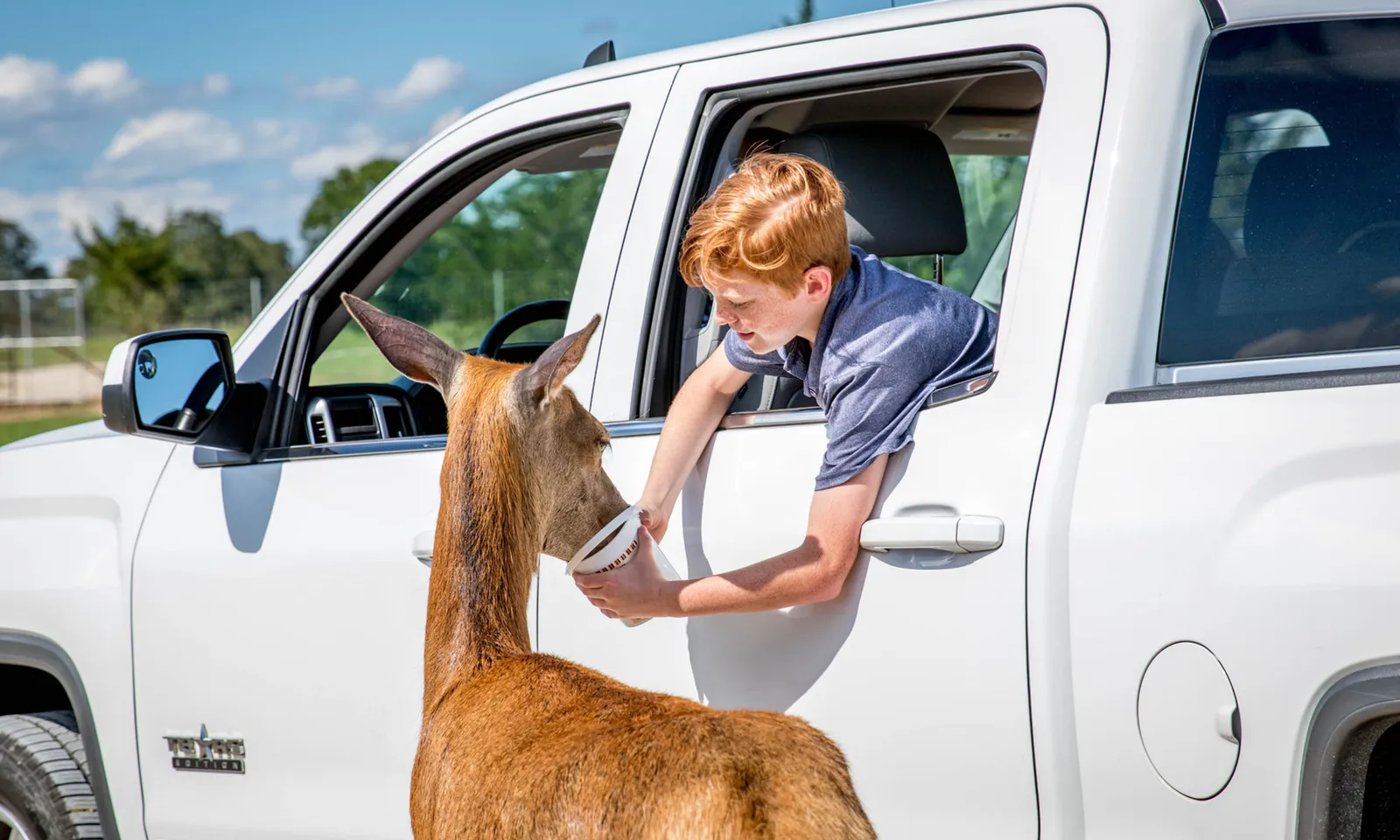
Aggieland Safari is a drive-through and walk-through wildlife park in Bryan, Texas, where guests drive their own vehicles through open habitats and feed animals from the car before continuing on foot through the walk-through section. A visit runs a couple of hours, and the gate is open daily through the afternoon. Alongside admission the park sells feed, close-up animal encounters, guided and private tours, and hosts parties and group bookings, and it is one of several wildlife parks run by a longer-established operator with sites in other states.
The park sits just outside a large university town, which puts two very different audiences within easy reach: families with young children, who visit in daylight at their own pace, and students, whose year is shaped by the academic and sports calendar. Its everyday operation is a daytime, general-admission experience, so the question in front of the park was how to add reasons to visit on particular days of the year without changing what it fundamentally offers.
Challenge
Aggieland Safari, a drive-through and walk-through safari park in Bryan, Texas, wanted to reach two audiences more deliberately: families with young children and university students. The park asked TASK to explore promotional options and event ideas for the first three quarters of its fiscal year, with a clear view of what each event would cost and whether it would pay for itself. Anything proposed had to work with what the park already had, its land, its animals, and the parts of the property that are not the safari itself, and had to fit around a gate that already opens every day. The open questions were what separates an event worth ticketing separately from one meant to fill the park, how to judge a concept before committing to it, and which months could carry an event for students alongside one for families.
How the team worked
The team started by working out what a good event looked like for the park. Rather than brainstorming freely, they set two tiers: small, separately ticketed events aimed at a specific group, and large general-admission events meant to fill the park. Each tier carried its own attendance goal, margin expectation, and marketing budget, so a concept could be placed in one tier or the other before anyone worked out the detail, and so the park could tell at a glance what a given event was supposed to do for it.
With that frame in place, the team built a shared cost breakdown in a spreadsheet covering labor, production and operations, and marketing, and ran every concept through the same assumptions. That made the concepts comparable: two events with similar attendance goals could still sit far apart once setup and staffing were priced, and the cost of drawing each attendee became something the park could read off the sheet rather than estimate.
Idea generation was split by month and by quarter, with each member of the team taking a period and flushing out concepts for it before the group reviewed them together. Concepts were anchored to things already fixed on the calendar: holidays and seasonal moments, the school year, graduation season, summer, and the university's academic and sports schedule for the student-facing events. Partnership angles were sketched where an outside organization could supply the reason to visit, such as adoption weekends with local shelters or evening tastings on the park's land.
The work was delivered in quarterly stages rather than all at once. The first quarter was handed over ahead of the rest so it could be reviewed and put to use while the later quarters were still being shaped, and revisions to the earlier quarters were folded into the final stage. Progress was reviewed with the park in client meetings through the term, and the full calendar was presented in person at the end.
Workstreams
- Defined criteria separating small-scale events for a particular group from large-scale, park-wide events, with attendance goals and margin expectations for each.
- Built a cost breakdown for a typical event covering labor, production and operations, and marketing spend, and estimated the cost of acquiring each attendee.
- Developed a month-by-month event calendar from December through August, pairing one small and one large event each month with a target audience, timing, and format.
- Shaped concepts around the park's land, animals, and seasonal moments, from holiday and Valentine's evenings to egg hunts, conservation weekends, and summer camps.
- Identified partnership angles such as local shelters and winery-style evenings, and matched student-facing events to the university calendar.
- Delivered the plan in quarterly stages so the first quarter's events could be reviewed and used before the later quarters were finalized.
What the team found
- Separating events into two tiers showed that small, separately ticketed events for a defined group can be held to a higher margin, while park-wide events earn their place as draws that cover their costs.
- Pricing every concept the same way showed that production and operations, not marketing, carry most of the cost of an event, so format choices move the total more than promotion does.
- The cost of drawing each attendee varied widely between concepts, and the gap tracked how much new setup an event needed rather than how large its audience was.
- Concepts that leaned on what the park already had, its land, its animals, and its daily routine, tended to cost less to run than concepts built around new attractions.
- Mapping ideas month by month showed that most months already carry a seasonal moment that can anchor an event, and that student-facing dates cluster where the academic and sports calendar is busiest.
- Evening and adult-oriented formats reach a part of the audience and a part of the day that the regular daytime schedule does not, and they suit the park's land as much as its animals.
What the client received
- Event criteria defining small and large scale events with attendance goals, margin expectations, and marketing budgets
- Cost-breakdown workbook covering labor, production and operations, and marketing for any proposed event
- Quarter one calendar covering the December through February events, delivered ahead of the rest
- Quarter two calendar covering the March through May events, with revisions folded back into quarter one
- Quarter three calendar covering the June through August events, closing out the fiscal-year plan
- Event briefs naming date window, duration, target audience, format, and expected scale for each concept
- Partnership and promotion angles matched to the events they support
- Final deliverable presentation to the park's leadership
Outcome
Aggieland Safari now has a structured, full-year event calendar with a defined audience, format, timing, and scale for each event, along with a repeatable way to judge whether a proposed event fits its small or large criteria and covers its costs. The park can see which months are already carrying a seasonal moment and which are open, choose which concepts to run, adjust them as attendance comes in, and plan promotion around each one. It can also apply the same criteria to ideas of its own rather than treating every new event as a separate judgment call.
Recommendations
- Run two events a month, one small and separately ticketed for a defined group and one large and open to general admission, so every month carries both a margin event and a draw.
- Anchor concepts to moments already on the calendar rather than inventing occasions: holidays, Valentine's, spring egg hunts, graduation season, summer, and back to school.
- Build evening experiences for adults without children, such as guided evenings on the park's land with tastings, live music, or a paint-along, to use the property after regular gate hours.
- Use partnerships where an outside organization supplies the reason to visit, such as adoption weekends with local shelters or conservation weekends built around behind-the-scenes animal care.
- Time the student-facing events to the academic and sports calendar, with a back-to-school outing early in the term and game-day formats during the football season.
- Test every proposed event against the criteria and the cost sheet before committing, so tier, audience, margin expectation, and marketing spend are settled in advance.
Next steps
- The client was handed a month-by-month event calendar running from December through August, each entry naming a date window, duration, target audience, format, and expected scale.
- The client was handed the first quarter of that calendar ahead of the rest, so those events could be reviewed and acted on while the later quarters were still being shaped.
- The client was handed the event criteria and the cost-breakdown workbook, so it can test concepts of its own against the same tiers and cost assumptions.
- The client was handed partnership and promotion angles attached to specific events, including shelter and community tie-ins and student outings matched to the university calendar.
The team
- Mayra Luna, project lead, December event concepts and cost breakdown
- Aliyaan Killedar, January event concepts and cost breakdown
- Binh Minh Duong
- Jennifer Zheng
- Justice Ishio, December event concepts and cost breakdown
- Zolee Tu, February event concepts and cost breakdown